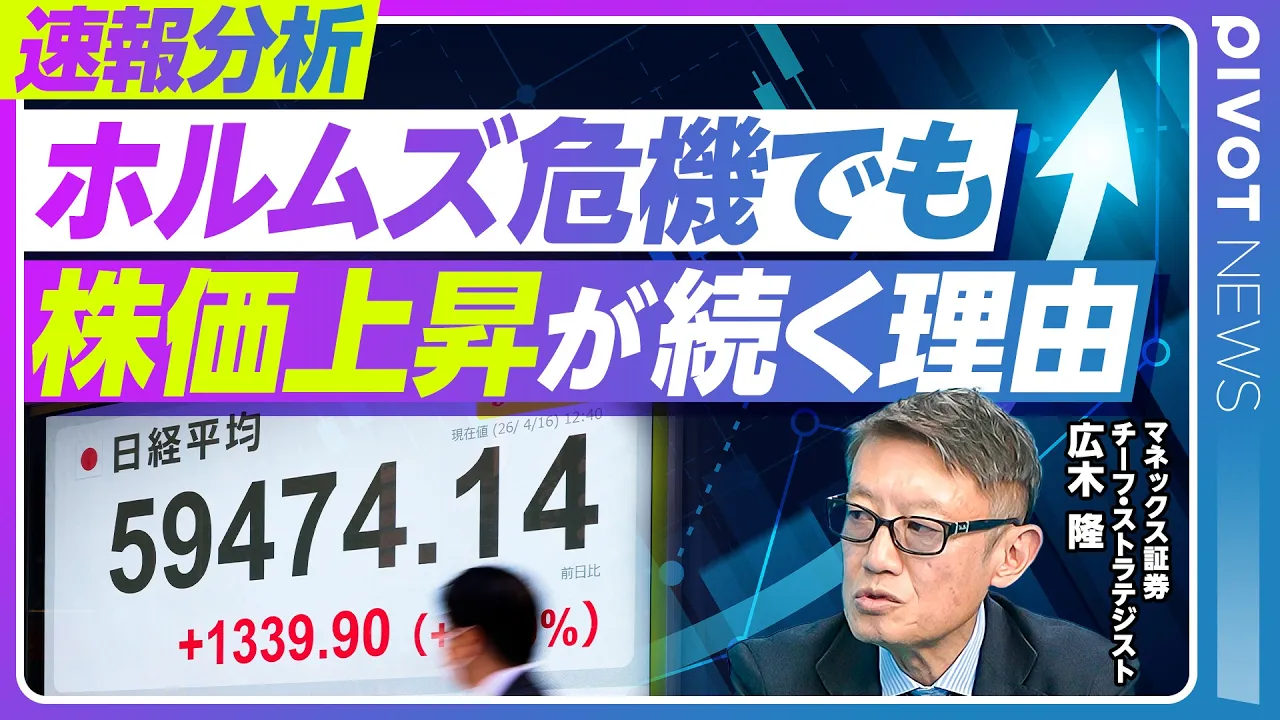
Why Stocks Keep Rising Even Through a Hormuz Crisis
Watch on YouTube ↗ Summary based on the YouTube transcript and episode description.
Monex Securities chief strategist Takashi Hiroki explains the structural reasons equity prices sustain long-term gains through geopolitical shocks, and the case for Nikkei 100,000 by 2032.
- The Nikkei’s long-term trend is roughly 7% annualized. The past 50 years include the Global Financial Crisis, the 2011 earthquake, and the dot-com bust.
- Rule of 72: 72 ÷ 7.2% = 10 years to double. Nikkei 50,000 × 2 = 100,000, implying around 2032.
- With current returns running closer to 10%, the math shortens: 72 ÷ 10 = 7.2 years — still landing near 2032 for the 100,000 target.
- Hiroki’s own portfolio has compounded at 7% annually; a slight edge from professional positioning.
- The Strait of Hormuz situation is a short-term shock, not a structural force that changes the long-term trend.
- In an inflationary environment, companies can pass cost increases through to prices and margins stay intact.
- During deflation, any price hike chased customers away. Now that inflation is the baseline, consumers accept it.
- The pass-through chain — higher oil → higher plastic costs → higher dry-cleaning prices — protects corporate earnings.
2026-04-19 · Watch on YouTube
Japanese page: ホルムズ危機でも株が上がる理由