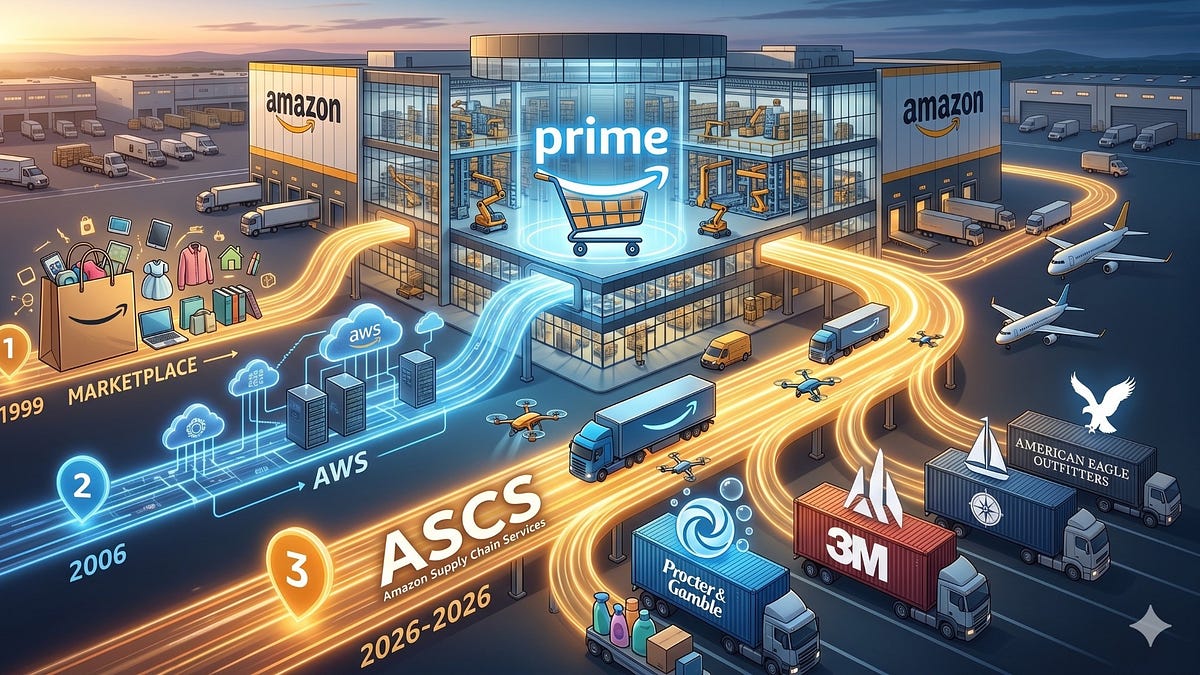
Amazon opened its 1,300-facility logistics network to outside enterprises, repeating the same internal-cost-center-to-product playbook as Marketplace and AWS.
Key Takeaways
ASCS follows a clear pattern: build infrastructure at internal scale, optimize until marginal cost beats any external alternative, then open the API.
The structural cost gap is ~16% from volume pooling (sqrt(N) law) plus ~35 percentage points from lighter parcels, non-union DSP labor ($19-25/hr vs UPS union $49/hr), and automation.
Amazon’s fully-loaded cost per parcel is less than half UPS Ground’s; ASCS priced 30% below UPS list still clears more margin per parcel than UPS does.
First enterprise customers P&G, 3M, Lands’ End, and American Eagle Outfitters face the same lock-in trajectory as Marketplace sellers and AWS tenants: egress friction and capacity dependence compound over time.
UPS’s replacement volume strategy (healthcare, SMB, premium brands) targets exactly the segments ASCS will pursue next, following the AWS arc from startups to regulated enterprises.