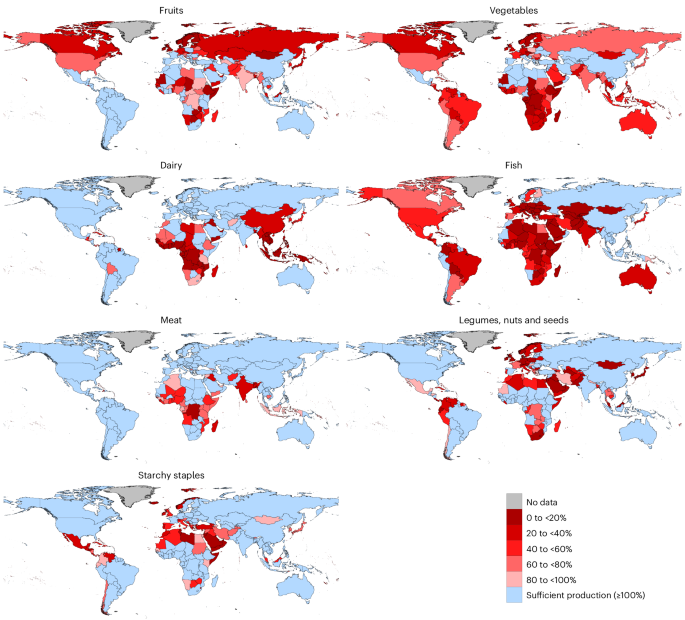
Nature Food study finds over a third of countries cannot meet self-sufficiency for more than two of seven essential food groups using 2020 FAO production data.
Key Takeaways
Only Guyana achieves self-sufficiency across all seven Livewell diet food groups; China and Vietnam reach six; six Middle East countries meet none.
Vegetables are the hardest gap to close: only 24% of countries are self-sufficient, with 91% of sub-Saharan African countries falling short.
Fish and seafood self-sufficiency is the weakest globally at 25%; 60% of countries cannot cover even half their fish needs domestically.
Concentration risk compounds scarcity: many low-production countries source over half of a single food group from one trade partner, especially small island states.
2032 projections show strongest gains in legumes/nuts/seeds (+19 pp gap closure) and starchy staples, but dairy and fish show minimal improvement potential.
Hacker News Comment Review
Commenters flag a structural paradox in nationalist food security strategies: Finland’s focus on animal production depends on imported feed, undermining the self-sufficiency logic.
The profit motive may explain the mismatch, with animal products being the only economically viable domestic category in cold-climate countries regardless of dietary guidelines.