Evan Spiegel on distribution, copied software, and Snap’s hardware bet
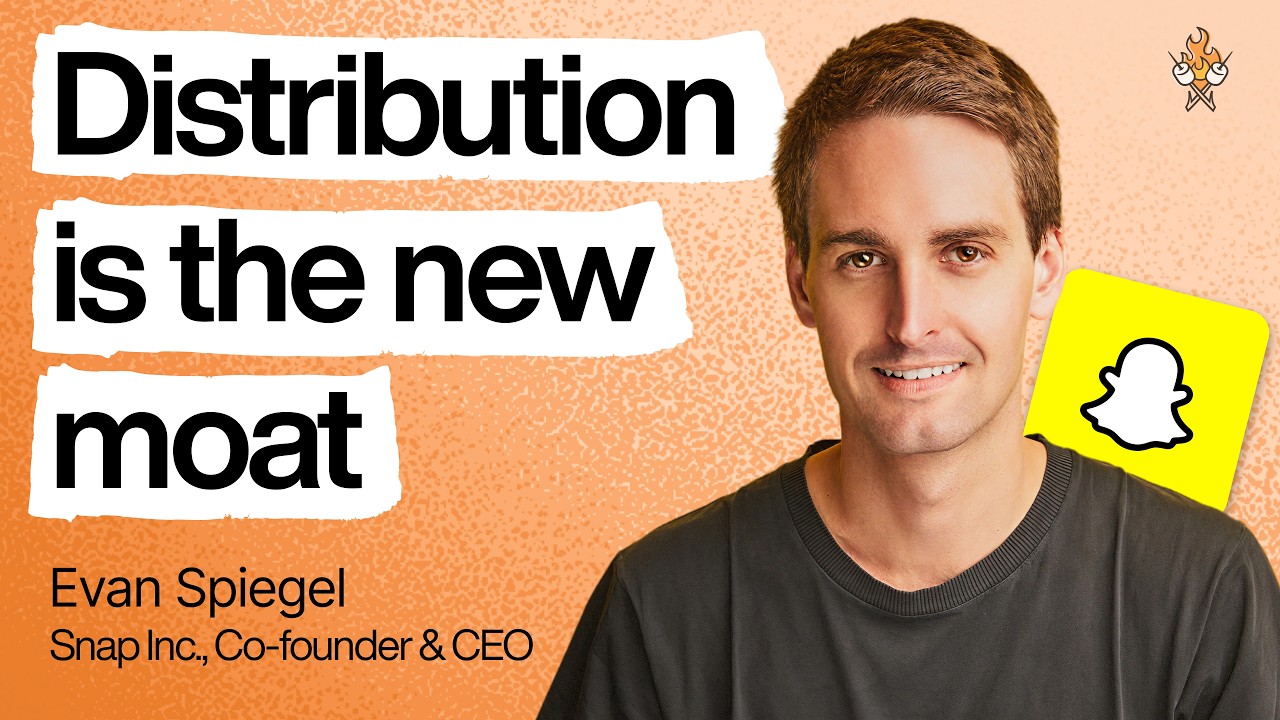
Published 2026-04-26 - Runtime about 70 min - Watch on YouTube
TLDR
- Evan Spiegel argues consumer distribution, not product polish, is the hardest part of building durable social software.
- Snap’s playbook is useful for founders, product teams, and engineers building in AI, social, or hardware.
- The episode focuses on why Snap keeps innovating despite copied features and why Specs matters to its next chapter.
Key Takeaways
- Snapchat grew by connecting people to close friends, not maximizing network size.
- TikTok and Threads succeeded, in Evan’s view, because they solved distribution.
- Snap learned 15 years ago that software is not a moat and shifted toward ecosystems and hardware.
- Snap’s design team is intentionally flat, small, and high-velocity to keep innovation alive.
- Evan sees humanity, not just technology, as the bottleneck for AI adoption.
Notes
- Snapchat has nearly 1 billion monthly active users and over 6 billion a year in revenue, but Evan still frames the business as unfinished.
- The episode argues consumer technology teams overfocus on product-market fit and underfocus on distribution.
- TikTok is described as having bootstrapped distribution with billions spent subsidizing both viewers and creators.
- Threads is presented as winning by leveraging Meta’s distribution across its other products.
- Snapchat’s early growth came from serving your best friend, partner, or spouse rather than the largest possible social graph.
- Evan says people copy Snap because the company keeps making things worth copying.
- Snap’s response to cloning has been building harder-to-copy ecosystems around creators, developers, and augmented reality.
- Hardware is part of that strategy because a vertically integrated AR stack is harder to replicate than a software feature.
- Specs is positioned as a new computer that gets people off hunched-over phone usage and into shared, hands-free experiences.
- He says the latest Spectacles path included adding a second camera for depth, a display for digital overlays, and an operating system in 2024.
- Evan cites Safi Bahcall’s Loonshots to explain Snap’s approach: large organizations need structure, while innovation needs a flat, flexible team.
- AI is already shaping Snap’s workflow through Glean and Claude, including agents that draft specs, do risk analysis, and prepare go-to-market materials.