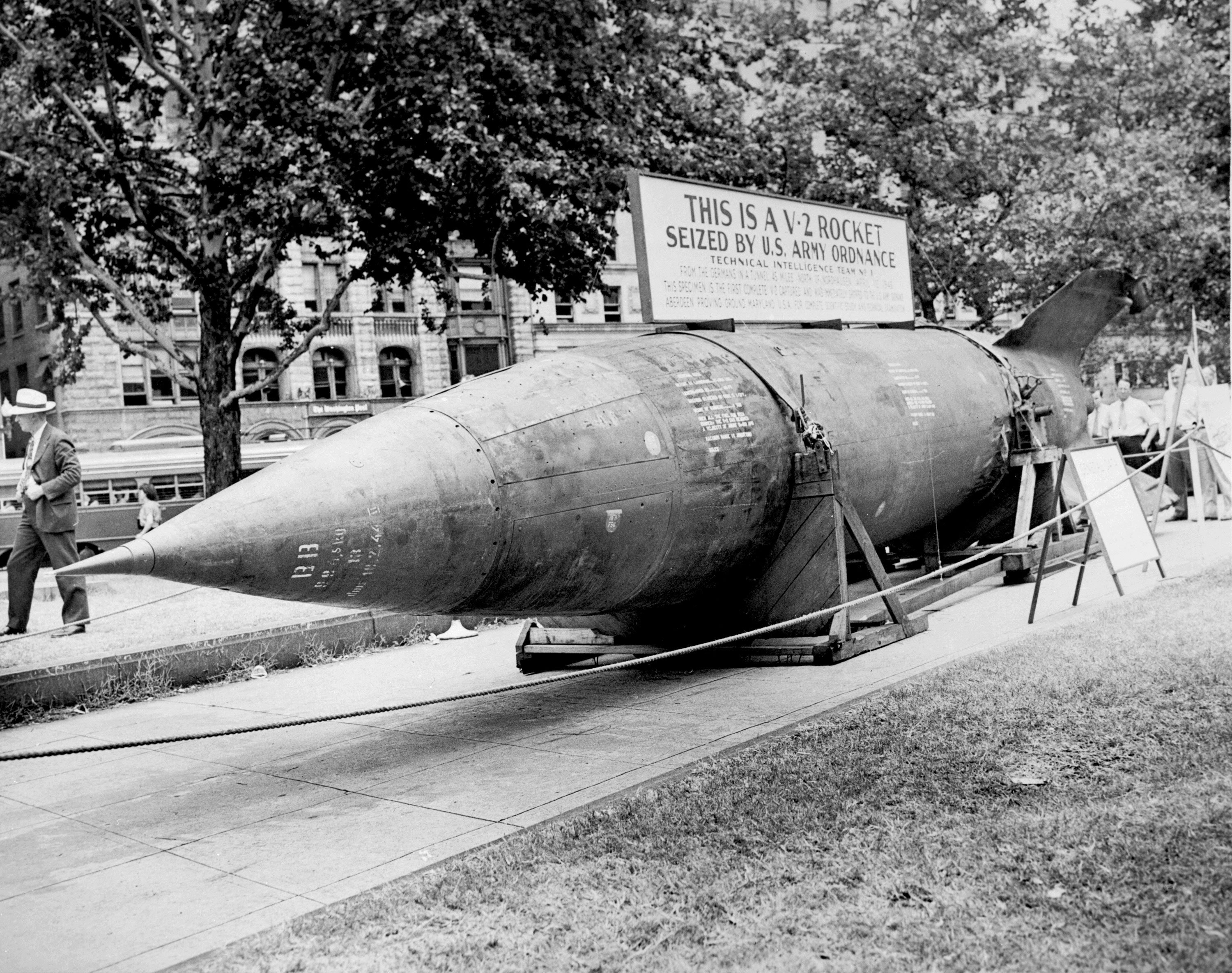
WWII V-2 missile technology, captured scientists via Operation Paperclip, and Cold War ICBM competition directly produced the rockets that launched Sputnik and Explorer 1.
Key Takeaways
Both superpowers built their early space programs on captured V-2 hardware and German engineering talent; the Soviet R-1 was a direct V-2 clone, the U.S. path ran through WAC Corporal and Viking.
Operation Paperclip imported 1,600+ German scientists and engineers, including Wernher von Braun, giving the U.S. direct access to V-2 design knowledge at White Sands.
The Soviet R-7, developed 1954-1957 under Korolev, was the world’s first ICBM and doubled as the launch vehicle for Sputnik in October 1957.
Miniaturization of hydrogen bombs by 1953 was the key enabler: it meant ICBMs did not need to be as large as earlier estimates required, accelerating U.S. missile programs.
Explorer 1 launched on a Jupiter-C, a modified Redstone ballistic missile, confirming that U.S. space capability came directly from its Army missile program, not the civilian Vanguard program.