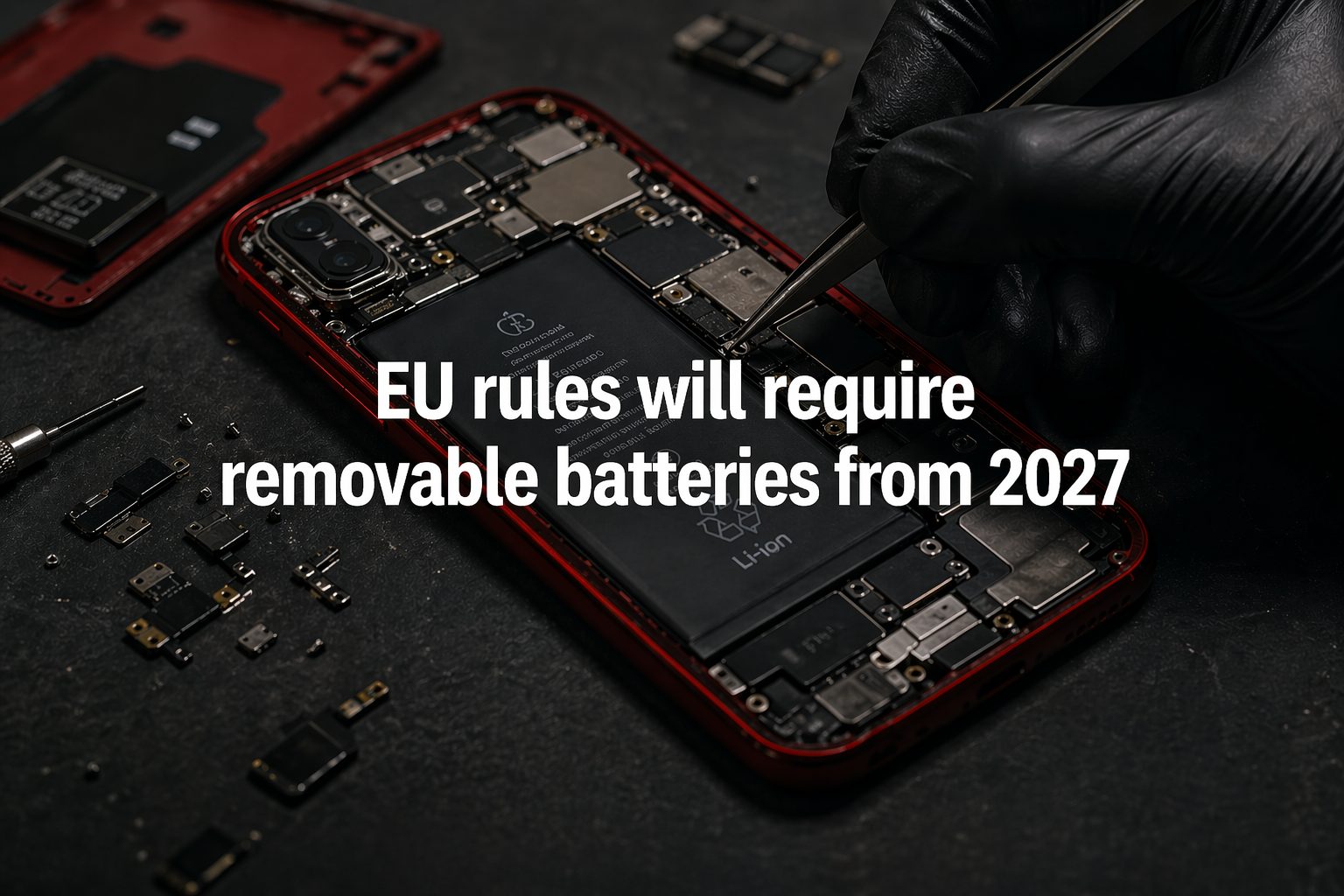
EU regulation effective February 18, 2027 requires new smartphones and tablets to have user-replaceable batteries using standard tools.
Key Takeaways
Heat- or solvent-activated adhesives are banned; manufacturers must supply any required special tools free of charge.
Replacement batteries must remain available at reasonable prices for at least 5 years after a model’s release.
Exception applies if a device retains 80% capacity after 1,000 charge cycles AND meets IP67 water/dust resistance simultaneously.
A digital “battery passport” via QR code will expose carbon footprint, recycled material content, chemical composition, and state of health.
EU projects consumer savings of tens of billions of euros by 2030 through longer device lifespans and reduced e-waste.
Hacker News Comment Review
The 80%/1,000-cycle exemption is contested: at least one commenter noted the cycle-count language was reportedly removed from the final adopted text, making the exception’s scope unclear.
Commenters split on real-world battery failure rates: skeptics argue phones are discarded due to slowness or physical damage, not battery degradation, undermining the regulation’s premise.
A practical use case beyond degradation got traction: swappable spare batteries for extended off-grid use (hiking, remote photography) is a distinct benefit the repair-framing undersells.
Notable Comments
@alt227: Notes that hot-swapping fully charged spares in the field is a lost use case unrelated to repair, and the industry quietly buried it.
@everdrive: “this is a perceived downgrade in luxury status” – frames thickness anxiety as status signaling, not real ergonomic loss.