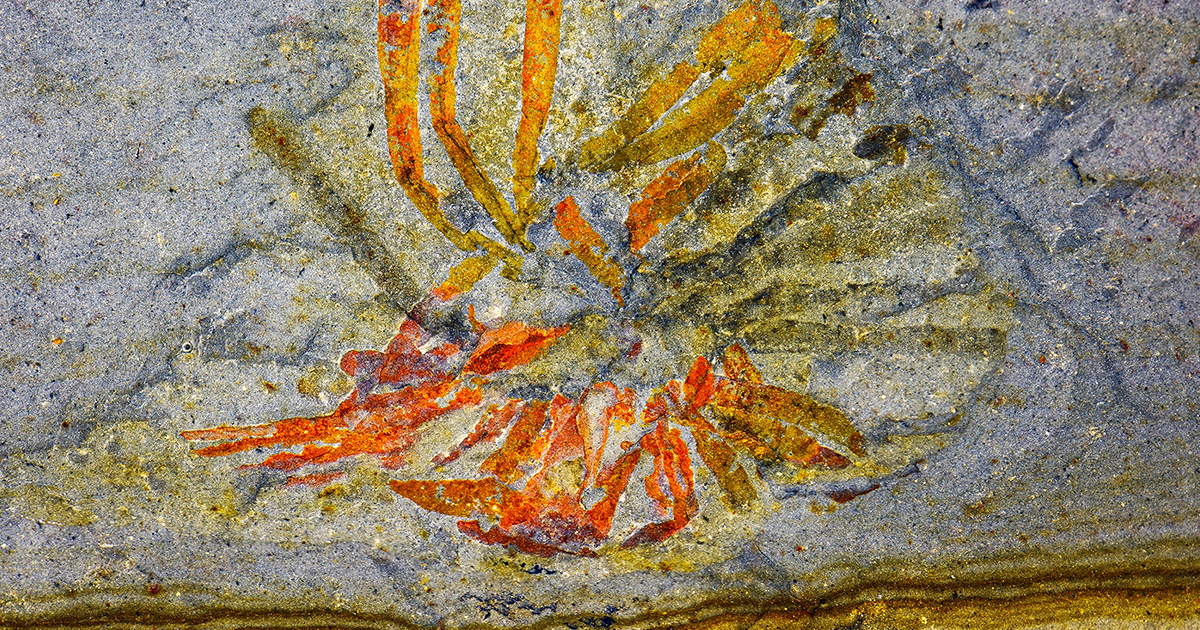
New Huayuan biota site in southern China yields 8,681 fossils across 153 species, over half new to science, post-dating the Sinsk mass extinction.
Key Takeaways
Huayuan biota is a Cambrian Lagerstätte dated after the 513.5 million year old Sinsk event, the first Phanerozoic mass extinction, showing deep-water refugia survived.
153 species, 8,681 specimens recovered; soft-tissue preservation includes eyes, gills, nerve cords, and gut contents across arthropods, tunicates, lobopodians, and more.
Pelagic tunicate fossils suggest the ocean biological carbon pump originated in the Cambrian, with implications for understanding deep-time carbon cycling.
Species overlap with Burgess Shale (Marrella, Choia carteri, Crumillospongia) indicates global ocean currents connected distant Cambrian marine ecosystems.
Guanshancaris kunmingensis, around 0.75 meters, is the largest identified specimen and likely an apex predator; a miniature radiodont under 5 cm shows unexpected size range.