Sarah Paine — Why Japan lost WWII (lecture & interview)
Watch on YouTube ↗ Summary based on the YouTube transcript and episode description. Prompt input used 79979 of 120344 transcript characters.
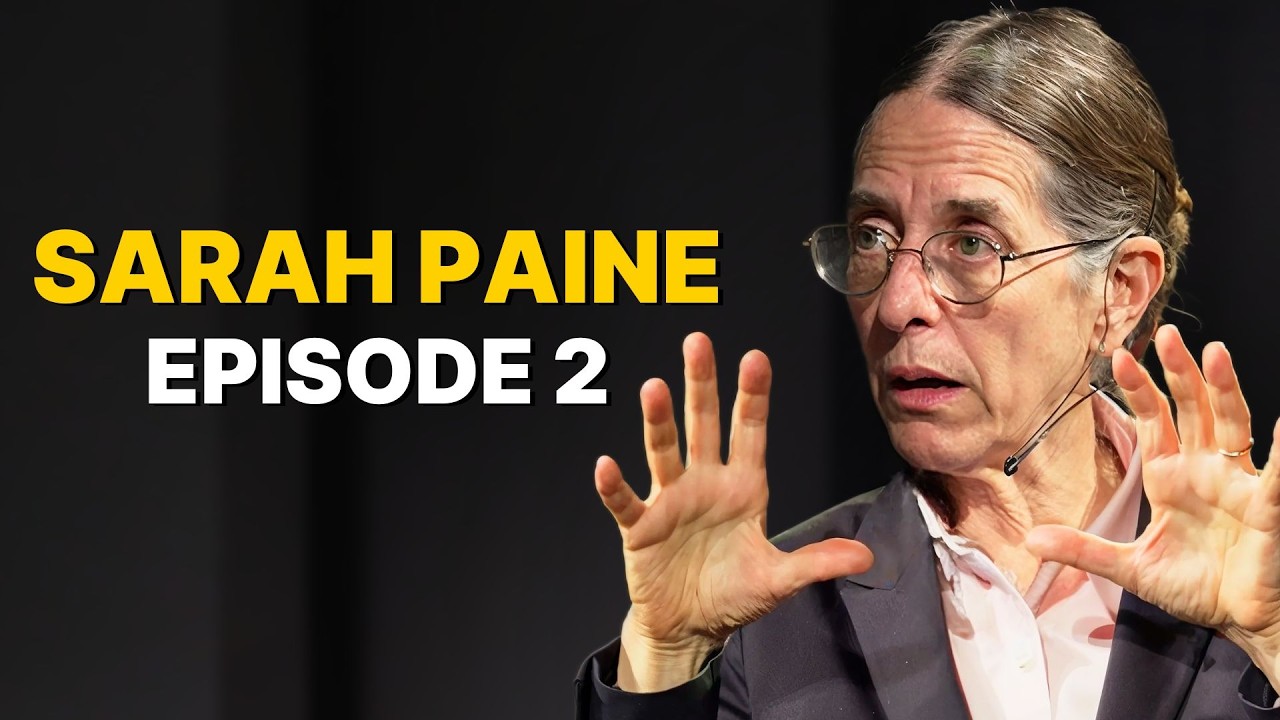
Naval War College professor Sarah Paine argues Bushido’s contempt for logistics and grand strategy — not just US industrial might — explains Japan’s defeat in WWII.
- Japan entered the Pacific War with steel/coal production at 1/13th of US levels and munitions at roughly 1/10th; each Japanese soldier had ~2 lbs of equipment vs. 4 tons per US soldier.
- 85% of Japan’s 2.1 million WWII military deaths occurred in the final 14 months, largely from starvation after transport shipping collapsed to one-ninth of prewar levels.
- The US oil embargo of 1941 — triggered by Japan’s invasion of French Indochina — directly caused the Pacific War; Japan had no oil strategy and discounted US production statistics as propaganda.
- Bushido literature explicitly denigrates military strategy: Yamamoto Tsunetomo wrote that studying tactics causes hesitation, and that warriors should ‘dash in headlong.’
- Interservice rivalry was catastrophic: the Army and Navy shared no operational plans, refused to convoy each other’s supplies, and the Army war college was still teaching Soviet tactics in 1943 while fighting the US.
- Japan began every war — First Sino-Japanese, Russo-Japanese, Second Sino-Japanese, Pacific — with a surprise preemptive strike, substituting operational shock for grand strategy.
- Kamikazes were partly a fuel problem: Japan lacked aviation fuel to fly pilots back, and lacked fuel to train them for full combat missions, making guided-missile crashes the rational choice.
- Paine draws a direct parallel to Putin: unlimited territorial objectives make compromise strategically counterproductive, but she acknowledges sanctions have a poor track record of changing authoritarian behavior.
2025-01-25 · Watch on YouTube