
kubell COO Shoji Fukuda on Strategy Premises, Hiring, and Operating Through Uncertainty
Shoji Fukuda, COO of kubell (formerly Chatwork), argues that rigorous debate of underlying assumptions — not strategy documents themselves — is what separates companies that adapt from those that stall.
- Fukuda separates premise from strategy: he argues that debating world-view assumptions rigorously matters more than the strategy document itself.
- He projected 2 years of COVID-driven demand and scaled inside sales; when the boom ended in 3 months, he pivoted to marketing quality, calling it a premise change, not a strategy failure.
- Chatwork embeds HRBPs inside each business unit so recruiters understand specific capability gaps before sourcing, replacing centralized HR with business-aligned talent strategy.
- He reads all inside-sales and customer-success daily reports to build customer hypotheses, substituting breadth of internal data for direct customer face time he lacks.
- 70–80% of recent mid-career hires previously used competing tools; publishing detailed IR and strategy documents shifted their perception of Chatwork’s competitive position.
- His top hiring criterion is adaptability — specifically the capacity to extract learning from ambiguous outcomes and absorb rapid strategy reversals without disengaging.
- Chatwork’s true long-term competitors are LINE, Facebook Messenger, and government SMB support programs, not messaging SaaS rivals.
- For pre-PMF startups, over-strategizing risks killing valid ideas; strategic frameworks become most powerful when shifting from product-out intuition to market-in discipline.
2025-06-26 · Watch on YouTube
Related coverage

Atomic Software CEO Shoichi Hatanaka and CTO Ryusuke Kumita explain how they are building a multi-vertical SaaS empire across aesthetics clinics and security firms using a modular 'atomic' architecture.
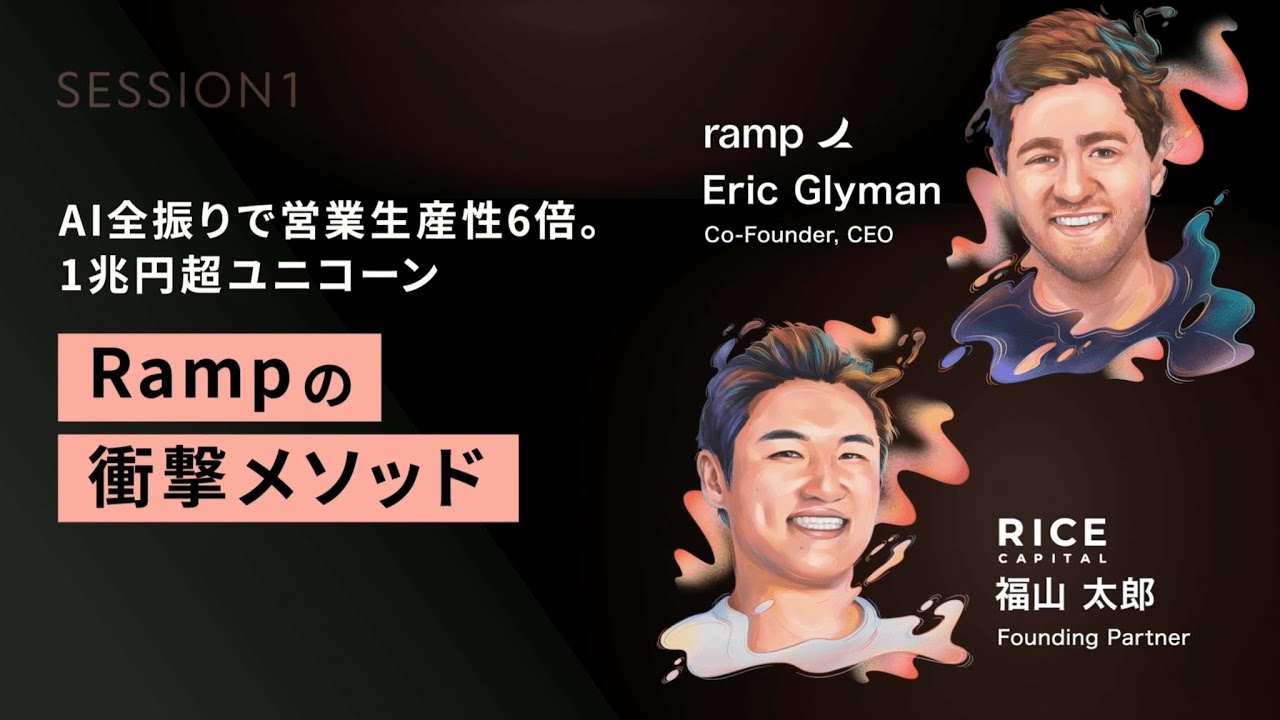
Ramp CEO Eric Glyman explains how the company hit $1B ARR in five years using a daily-count culture and AI-driven 6x sales productivity gains.