Rethinking Customer Success in a Recession: Yamada Hisanori on CS Strategy
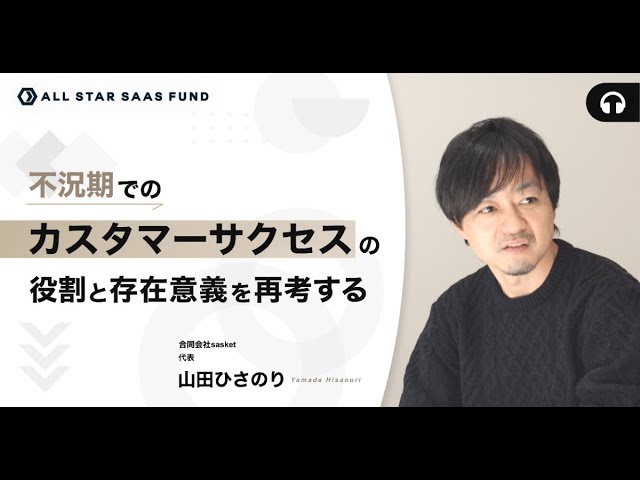
Watch on YouTube ↗ Summary based on the YouTube transcript and episode description.
Hisanori Yamada, author of Customer Success Execution Strategy and ALL STAR SAAS FUND CS mentor, argues that defining measurable product value is the foundation of all CS work, and that high-ACV enterprise accounts are shifting back to account executive-led post-sales models.
- Yamada ran a CS productivity experiment at a large client and found top CSMs outperformed bottom CSMs by 3x on the same ARR book, when measured by how fully customers realized defined product value.
- Churn prevention without a formalized product-value metric is structurally weak: CSMs who prevented churn but left product value untapped look identical to high performers in standard ARR-retention KPIs.
- High-ACV enterprise post-sales is shifting from CSM-led to account executive-led account plans — Yamada says this is a return to how large-deal industries (finance, heavy equipment) always operated, not a new trend.
- CS applies only when two conditions are met: the vendor can clearly articulate its own product/service value (not customer-defined), and customer usage of that value is measurable; without both, customer satisfaction (not CS) remains the right operating model.
- Early-stage companies should experiment with pricing tied to product value and usage-based expansion; single flat-plan pricing structurally blocks CSMs from driving net revenue retention.
- Konosaki (VC perspective): in a downturn, the first budget to protect is R&D; G&A cuts come first, then scrutiny of CS and S&M efficiency — CS headcount risk is real at growth stage but not at seed/Series A where product-value definition is still the mission.
- Japan SaaS market is estimated roughly 7 years behind the US, but Konosaki sees it as the highest-potential SaaS market globally; mission-critical use cases are the key differentiator for durable growth.
2025-06-26 · Watch on YouTube
Related coverage

Atomic Software CEO Shoichi Hatanaka and CTO Ryusuke Kumita explain how they are building a multi-vertical SaaS empire across aesthetics clinics and security firms using a modular 'atomic' architecture.
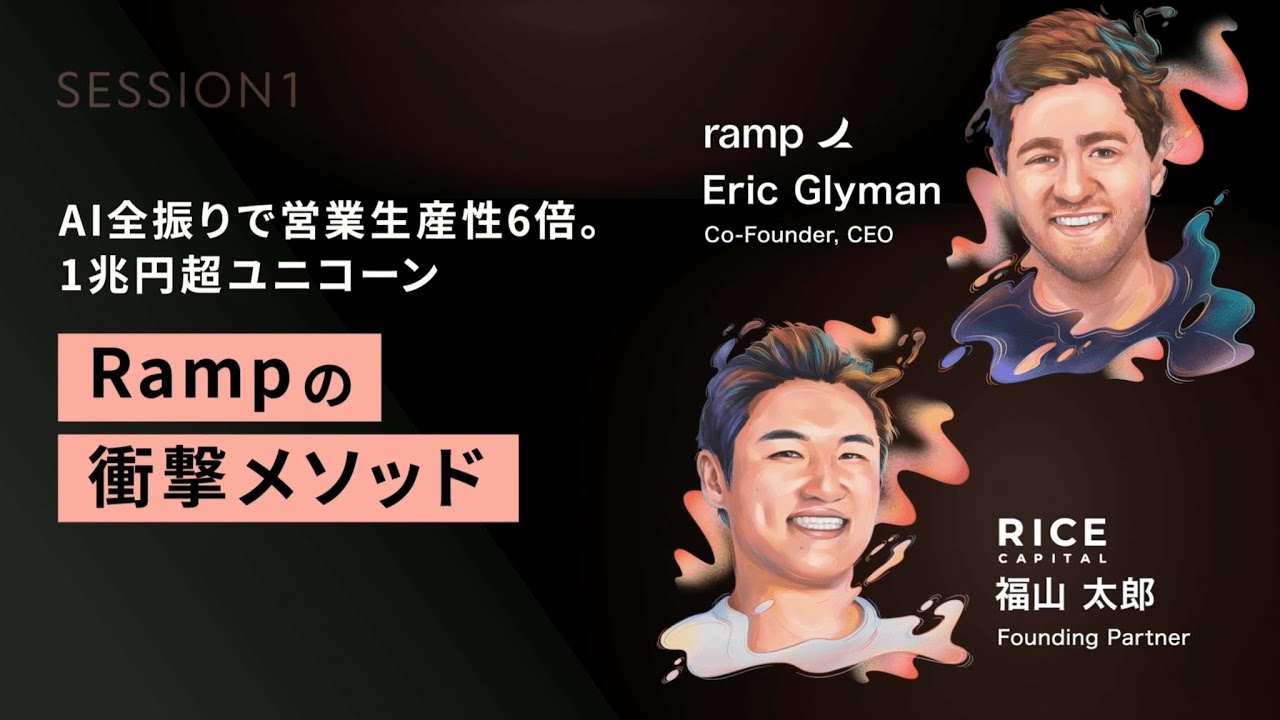
Ramp CEO Eric Glyman explains how the company hit $1B ARR in five years using a daily-count culture and AI-driven 6x sales productivity gains.