How To Get The Most Out Of Vibe Coding | Startup School
Watch on YouTube ↗ Summary based on the YouTube transcript and episode description.
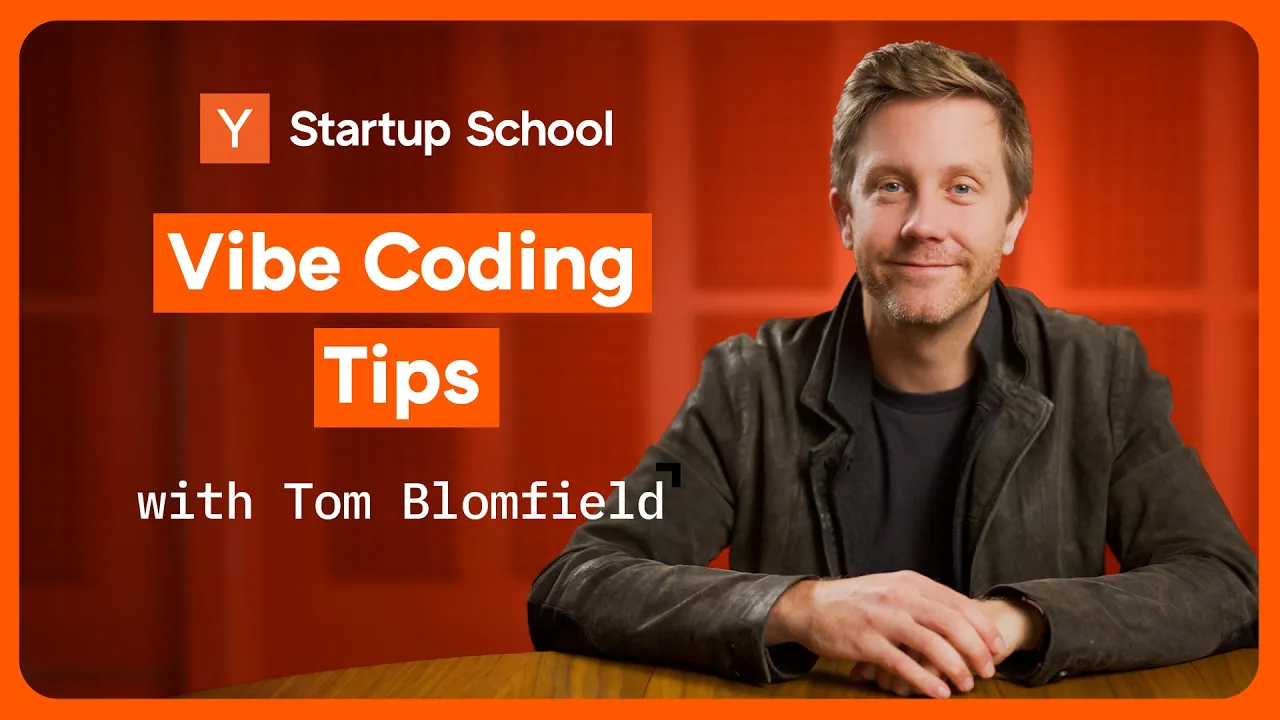
YC partner Tom Blomfield shares a practical vibe coding playbook: plan in markdown, git reset aggressively, and never accumulate layers of failed fixes.
- Rails outperforms Rust/Elixir for AI-assisted coding due to 20 years of consistent, high-quality training data online.
- Blomfield uses Aqua (YC company) for voice input at ~140 wpm, roughly double typing speed, to drive Windsurf and Claude Code.
- When a coding agent loops on a bug, git reset hard and feed only the known-good fix back into a clean codebase — never accumulate layers.
- Gemini currently leads for whole-codebase indexing and planning; Sonnet 3.7 leads for actually implementing code changes; GPT-4.1 disappointed on first test.
- Build complex new features as a standalone clean-room project first, then point the LLM at that reference implementation to port it into the main codebase.
- Write high-level end-to-end integration tests (not unit tests) before moving to the next feature — catches LLM regressions on unrelated logic.
- Download API docs locally into the project folder so the LLM reads them directly, rather than relying on patchy live web doc fetching or MCP servers.
2025-04-25 · Watch on YouTube