How does Claude Code *actually* work?
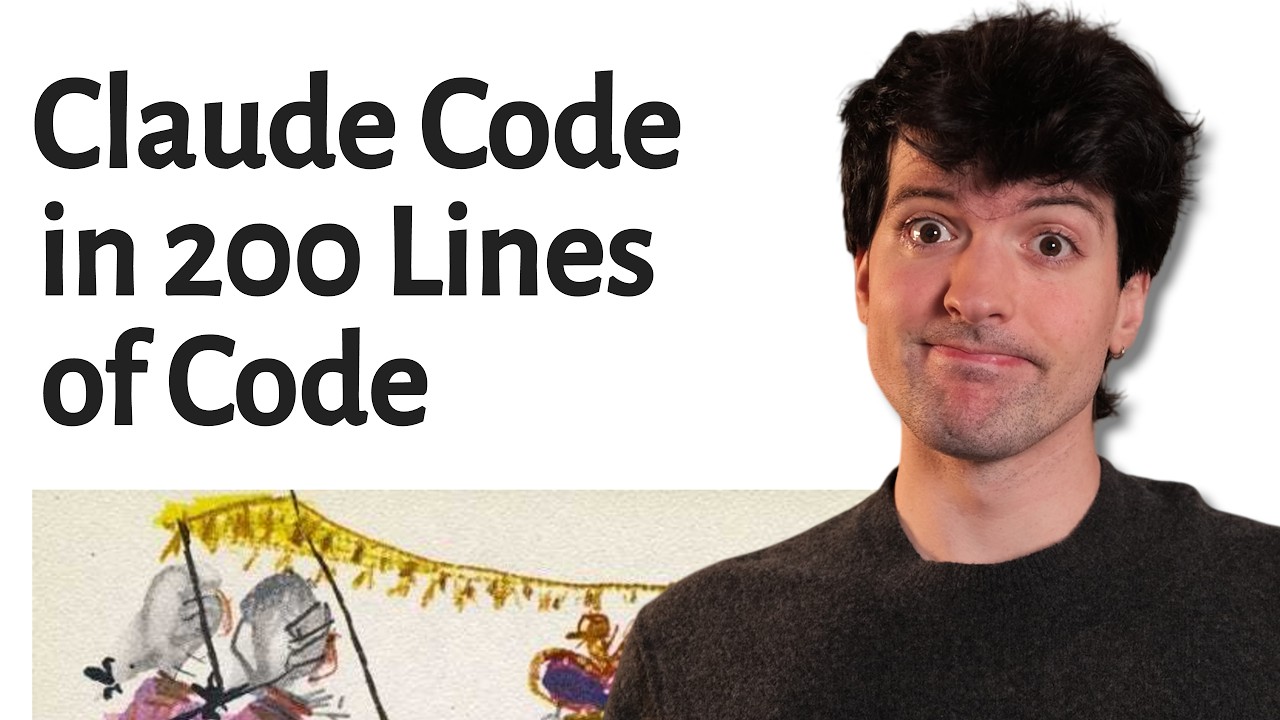
Theo (t3.gg) explains that AI coding tools like Claude Code and Cursor are just ‘harnesses’ — tool-calling loops in ~200 lines of Python — and that cursor’s edge comes from prompt tuning, not model access.
- Opus 4 scored 77% accuracy in Claude Code’s own harness but 93% in Cursor’s — same model, different harness
- A functional AI coding agent requires only 3 tools: read file, list files, edit file — or just bash alone
- The entire harness loop is ~60-75 lines of Python; the core is a tool-call/re-request cycle, not AI magic
- Context window stuffing degrades model accuracy: Sonnet’s ability to find repeating content drops ~50% past 50-100K tokens
- Cursor employs people whose sole job is micro-adjusting system prompts and tool descriptions for each new model release
- Tool descriptions can lie — returning fake data or routing to a different model entirely; the LLM cannot detect this
- Anthropic and Google restrict using paid subscriptions (Claude Max $200/mo, Gemini $250/mo) outside their own harnesses; OpenAI does not
- CLAUDE.md / AGENTS.md files work by pre-loading context before the first tool call, reducing redundant tool calls at session start
2026-04-13 · Watch on YouTube