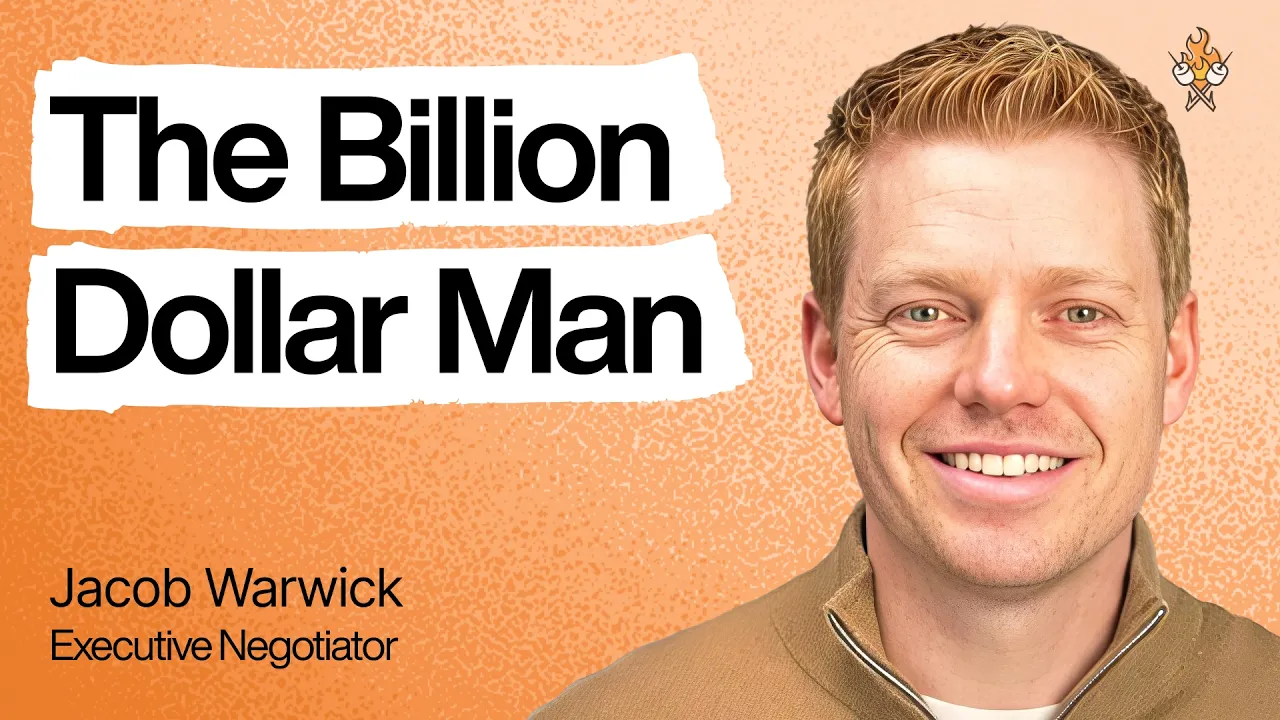
Jacob Warwick’s Playbook for Negotiating More Compensation
Published 2026-03-15 - Runtime about 115 min - Watch on YouTube
TLDR
- Jacob Warwick says a simple pushback like “what’s the chance there could be a little more here?” often unlocks a 20% bump.
- He treats comp negotiation like value creation: solve the company’s pain, then use timing, information, and performance triggers to widen the deal.
Key Takeaways
- Warwick says average movement in well-run negotiations is about 40%, with some cases reaching 100% to 400% when salary bands break.
- He argues companies extract 5-to-1, 10-to-1, even 100-to-1 value from senior hires, so asking for more is not greed.
- He prefers collaborative negotiation over confrontation and says founders should focus on top-talent retention, not just base salary.
- Performance-based incentives matter: he cites milestone triggers like revenue targets and Tom Brady-style clauses tied to wins and playoff outcomes.
- Re-anchoring too early can cap the outcome; he warns that the first number often becomes the ceiling.
Notes
- Warwick has helped clients secure over $1 billion in additional compensation.
- He says many product leaders, engineers, and designers negotiate worse than extroverted sales and marketing leaders.
- A soft ask such as “what’s the chance there could be a little more?” is his simplest recommended move.
- He often sees 20% improvement from a basic pushback, even without heavy negotiation.
- For clients, he targets about 40% average movement when a negotiation is run well.
- He says some cases produce 100%, 200%, 300%, or 400% increases, usually by breaking salary bands.
- Warwick advises understanding the company’s pain points and showing exactly how the hire will solve them.
- He prefers creative structures such as bonuses, milestone triggers, and stock tied to business outcomes.
- He says companies spend hundreds of thousands, sometimes millions or tens of millions, replacing lost IP and talent.
- His process is behind-the-scenes and “fingerprintless”: he coaches, strategizes, and debriefs, but does not directly negotiate.
- He warns against negotiating over email because tone is easy to misread and can create unnecessary conflict.
- When negotiations go south, he favors honesty, ownership, and a quick reset over defensiveness.
- He argues that asking for more should start before the offer, during interviews that feel like discovery calls instead of interrogations.