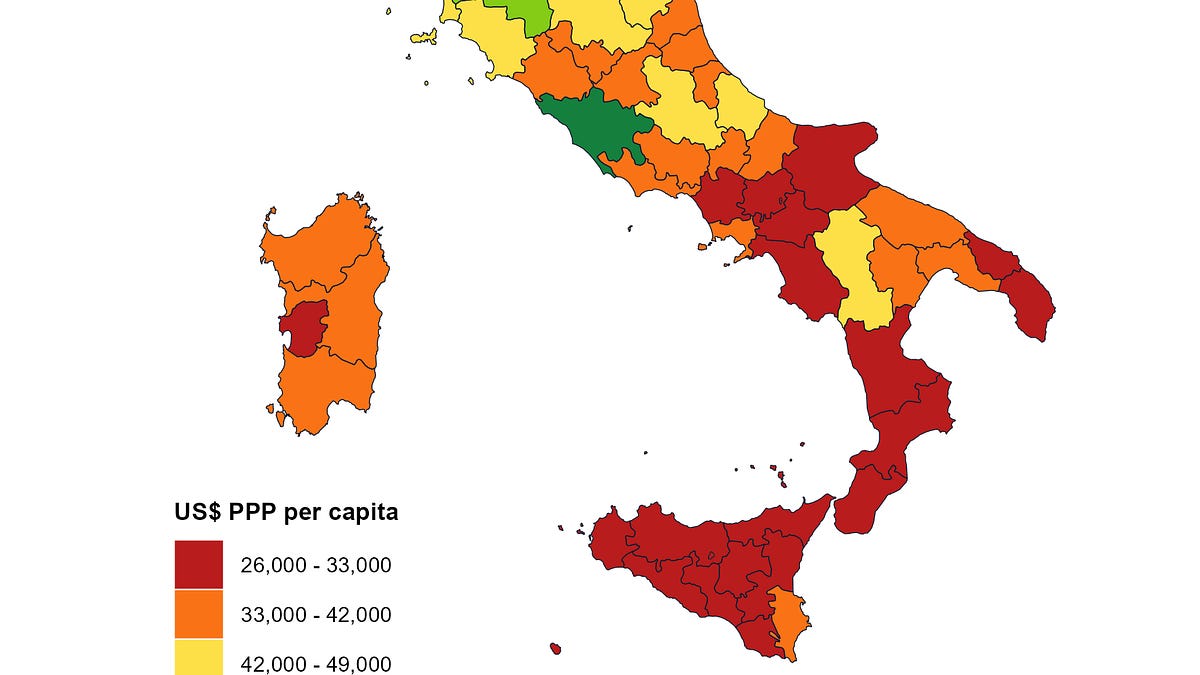
Blog post argues social science has largely solved the Italy South-North divergence: malaria, land concentration, medieval self-government, and the Mafia chain together explain the gap.
Key Takeaways
Putnam’s social capital thesis (civic traditions, trust, low corruption in the North) is the proximate cause, but not the ultimate explanation.
Buonanno et al. (2020/2026) instrument malaria exposure with climate-based risk and find strong links to land concentration and large estate formation.
Mariella (2023) uses malaria as an instrument for land inequality and finds concentrated landownership reduced literacy supply and demand from 1871 to 1921.
Guiso et al. (2016) estimate that absence of free city-state experience accounts for at least half the North-South social capital gap; bishop presence circa 1000 CE is the instrument.
Acemoglu et al. (2020) link the 1893 drought to Peasant Fasci spread, Mafia formation, and persistent reductions in literacy, public goods, and political competition.