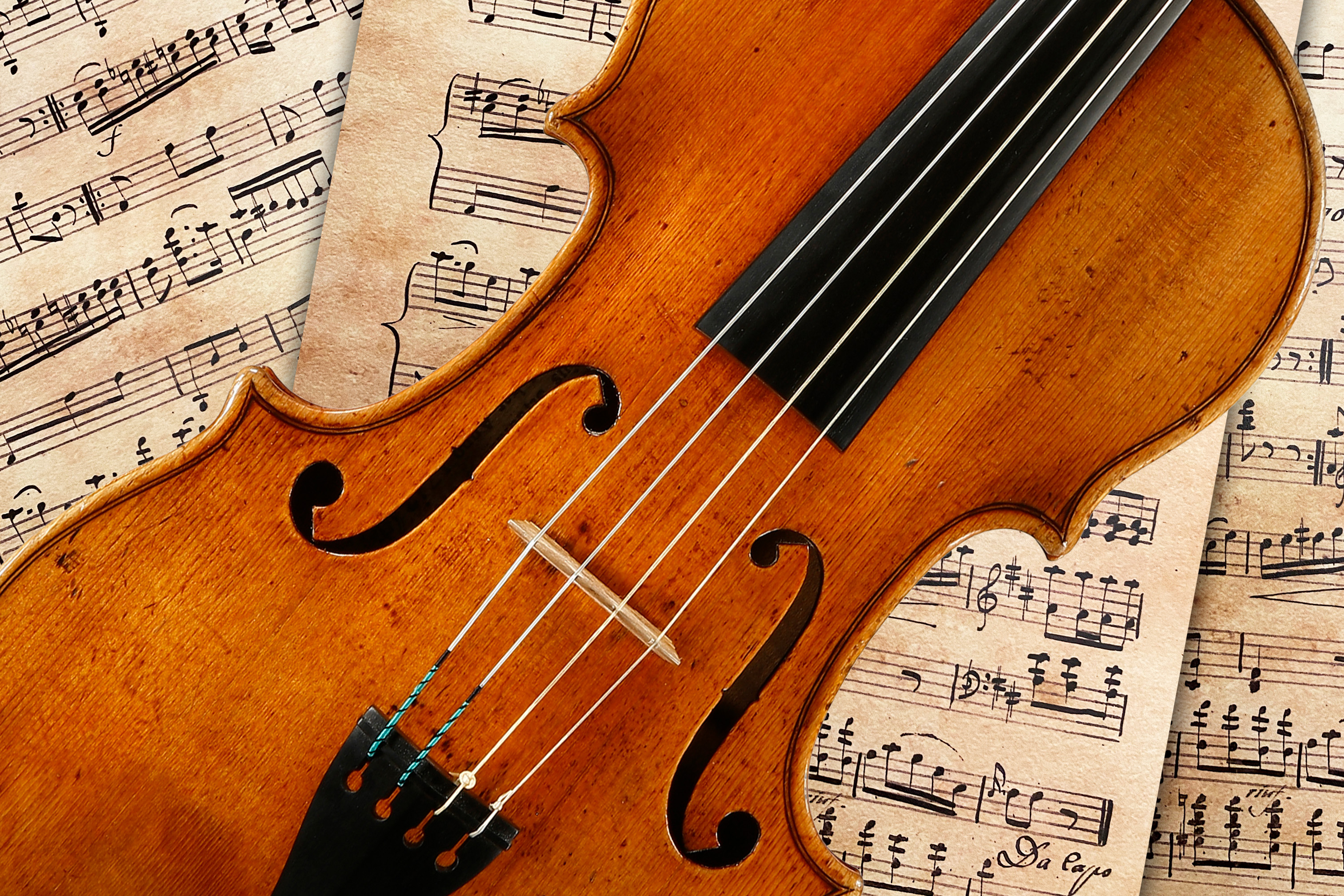
Study in npj Acoustics: MIT’s finite-element computational violin simulates physics-based pizzicato sound using a 1715 Stradivarius CT scan as its geometry source.
Key Takeaways
The model divides the violin and surrounding air into millions of elements, applying stress, motion, and acoustic wave equations to each – no sampling or averaging.
Input geometry came from Strad3D’s 600-slice CT scan of a 1715 Stradivarius; wood type, plate thickness, and string material are all parameterized.
Luthiers can swap parameters (wood species, plate thickness) and hear resulting changes before cutting any material, compressing an otherwise build-then-listen cycle.
Current limit: only pizzicato (plucked) strings are modeled; bowing involves nonlinear friction the team has not yet solved.
Demonstrated on two excerpts – “Bach’s Fugue in G Minor” and “Daisy Bell” – the latter a reference to the first computer-synthesized vocal performance.
Hacker News Comment Review
Commenters with domain expertise disputed the “first physics-based” claim outright: physical modeling synthesis dates to the 1980s, and Stefan Bilbao’s FDM/FEM work on acoustic instruments spans 20+ years – the paper’s novelty framing appears overstated.
Listeners found the output unconvincing as a violin; the uniform pluck timing across notes removes expressive dynamics, and the timbre struck players as synthetic rather than string-like.
A recurring point: even a perfect physical model of the instrument body fails without modeling the human-instrument interface – finger contact, variable pluck force, and bow-hair friction dominate perceived realism more than air-coupling accuracy.
Notable Comments
@zebproj: physical modeling of violin and voice goes back 40+ years; Daisy Bell itself used a physical vocal-tract model in 1962.
@superpope99: notes that a comparable engine-sound simulator accepted a trumpet input and “sort of just worked” – suggesting physics engines generalize across acoustic bodies.