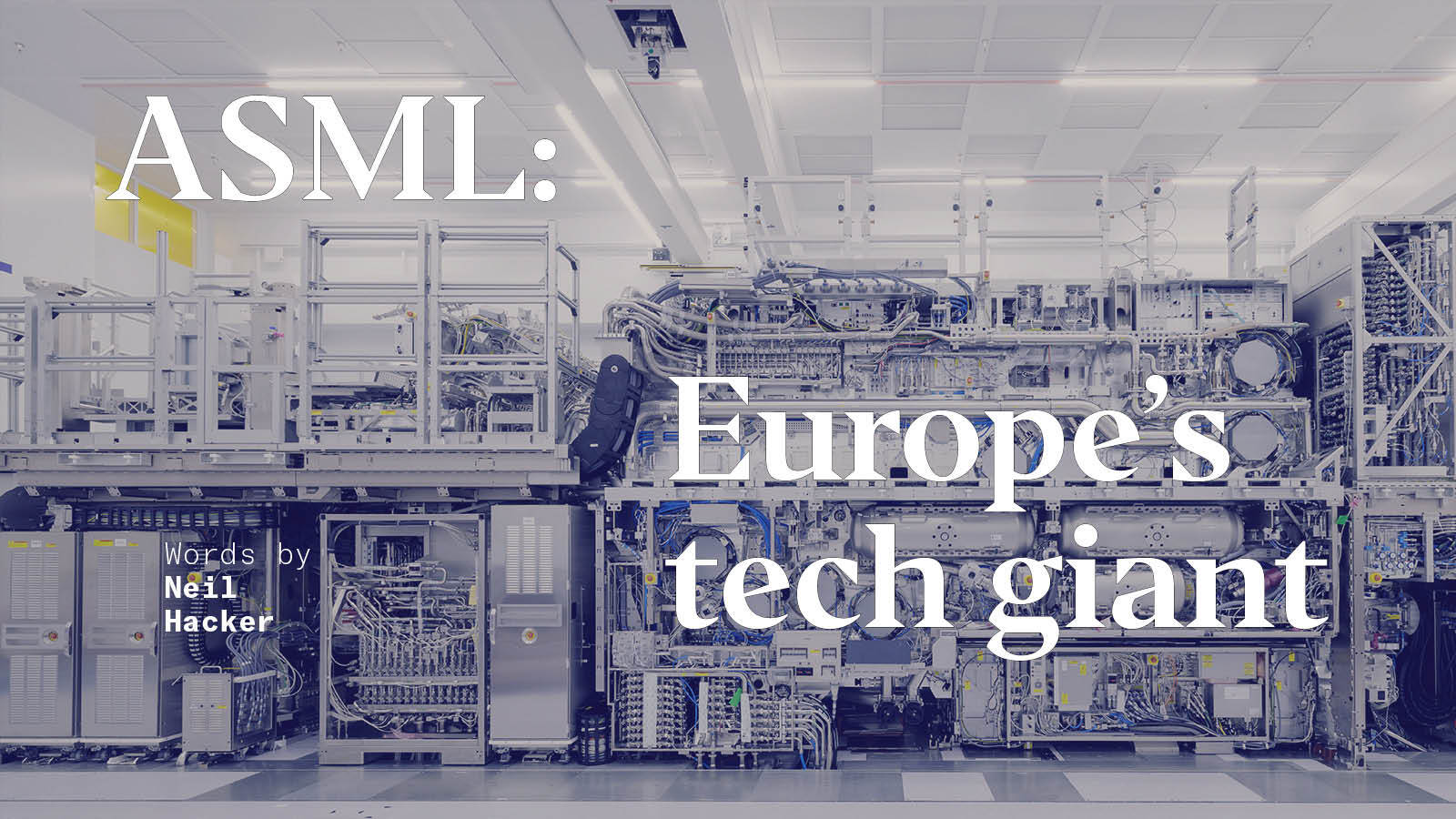
ASML holds a global monopoly on EUV lithography machines, the only tools capable of printing transistors at sub-5nm nodes.
Key Takeaways
EUV machines generate 13.5nm light by vaporizing tin droplets with laser pulses, then reflect the beam through mirrors polished to millimeter tolerances at Germany scale.
Without EUV, a 5nm node requires ~100 patterning steps; EUV collapses three or four cycles into one, making advanced nodes economically viable.
ASML’s outsourced modular design, mocked by German engineers in the 1980s, became its competitive moat: fast on-site repair and upgradeable subsystems beat Nikon’s superior precision.
The EUV Limited Liability Company (1997-2003) funneled $270M from Intel and US DOE labs into ASML’s core research, with ASML initially locked out as a non-American firm.
Each EUV machine costs over $120M, ships in 40 freight containers across three cargo planes, and contains 100,000+ components requiring perfect calibration.
Hacker News Comment Review
Core debate: commenters challenged whether ASML is the true chokepoint, with one arguing Carl Zeiss SMT’s mirror grinders are the real bottleneck since Zeiss cannot scale headcount the way ASML can.
On ASML’s dominance mechanism, the strongest take is that no single step is magic – the moat is meticulous compounding of optimizations across every subsystem, which makes it nearly impossible to replicate even with full knowledge.
Several commenters pointed to Chip War by Chris Miller and the Asianometry and Veritasium YouTube channels as the best supplementary deep-dives for anyone wanting more technical and business context.
Notable Comments
@lijok: “ASML can hire more engineers and build more machines. Zeiss cannot hire more mirror grinders. And noone wants to train as one.”
@quanto: ASML’s lead is not exotic physics but relentless per-step optimization – the compounding of marginal gains across 100,000 components is what makes it unreplicable.
@_nhacker: Author posted a full bibliography of ASML/EUV sources at neilhacker.com for anyone going deeper.