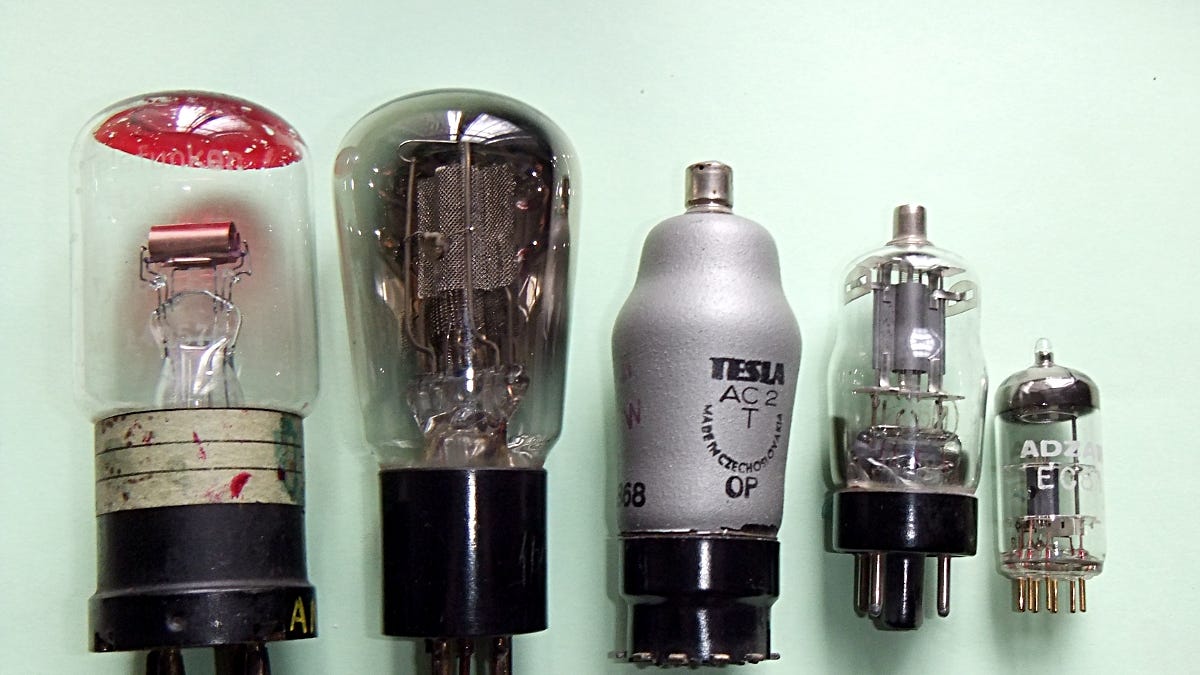
Vacuum tubes, from Geissler tubes to cathode ray tubes, built a vast technological ecosystem that still persists across lighting, displays, radar, and early computing.
Key Takeaways
Two parallel lineages converged: gas discharge tubes (Faraday, Crookes, Braun) and incandescent lamp research (Edison Effect, thermionic emission).
De Forest’s Audion triode, refined by AT&T, enabled transcontinental telephony in 1915 and powered ENIAC’s 18,000 vacuum tubes.
Cathode ray tubes spawned oscilloscopes, early television cameras (Zworykin, Farnsworth), electron microscopes, and Williams tube computer memory.
Gas discharge tubes directly produced neon signs, fluorescent lamps, mercury vapor, and sodium vapor lighting still in use today.
Key vacuum tube breakthroughs were byproducts: Roentgen discovered X-rays studying cathode rays; Edison found thermionic emission while debugging bulb blackening.