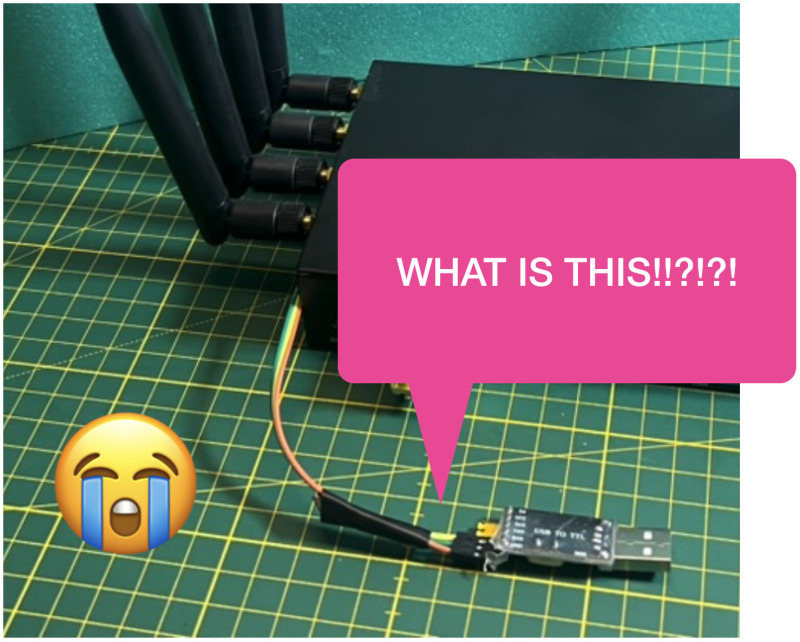
Julet M6 e-bike connectors (IP68, 3A, cheap on AliExpress) replace dangling Dupont jumper wires on UART TTL debug ports cleanly and reliably.
Key Takeaways
Dupont breadboard wires on UART TTL pins (RX/TX/GND) fatigue and break; the author’s NanoPi R4S stopped accepting input after repeated bending.
USB-TTL adapters left connected back-feed current through RX/GND even when unplugged from USB, making permanent connections a real electrical risk.
Julet M6 3-pin pigtails cost under $3, come pre-tinned, are IP68-rated, and assemble into working adapter cables in minutes with standard crimping tools.
A color-coding and arrow-on-Dupont convention handles RX/TX crossover without disassembly; GND on a separate 1-pin header eases cable routing through small holes.
5-pin and 6-pin Julet sockets accept 3-pin plugs, allowing backward-compatible expansion for future functionality on the same connector footprint.
Hacker News Comment Review
Commenters split on connector choice: 3.5mm TRS jacks (used by FTDI on their own cables) and magnetic 3-pin AliExpress connectors were both proposed as smaller alternatives, with TRS flagged for risky mid-insertion shorts during hotplug.
A recurring technical concern: plugging two 3.3V devices together is still unsafe if one is unpowered, because UART pins back-power through ESD diodes. Commenters pushed for a 4th Vref/Vccio pin so the adapter can match target voltage dynamically.
One commenter argued that for portable devices, skipping custom connectors entirely and wiring USB-C directly makes more sense: a CP2102 breakout with USB-C costs $1.40 on AliExpress and is electrically more robust than raw UART.
Notable Comments
@amstan: Flags back-powering via ESD diodes when target or debugger is off; recommends a 4th Vref pin so the debugger drives TX at the correct target voltage.
@theamk: “don’t bother with weird connector and bespoke adapters” – argues USB-C directly on the device is cheaper and more rugged than any custom UART connector scheme.