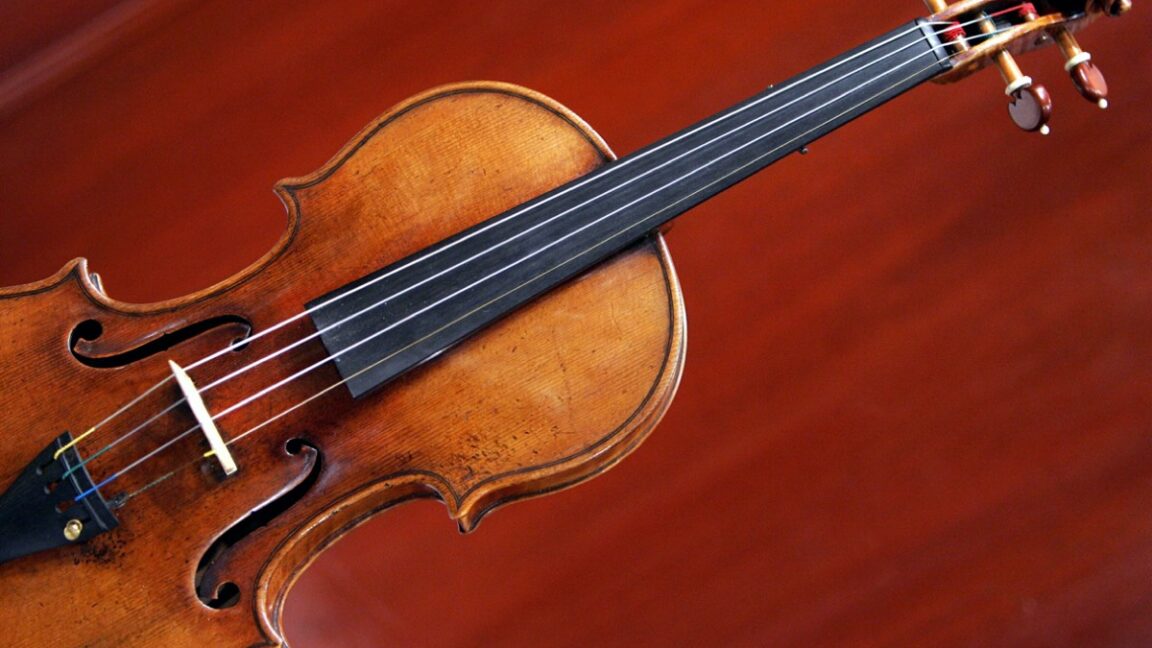
Paper in npj Acoustics presents a physics-based 3D simulation of the 1715 Titian Stradivarius that lets luthiers tweak parameters and hear results.
Key Takeaways
Model built from Strad3D laser-scan data of the Titian Stradivarius, broken into millions of material-tagged cubes with acoustic wave equations for surrounding air.
Simulates pizzicato plucking realistically; bowing is not yet supported due to its more complex string-body interaction.
Unlike sampling-based plugins, the MIT model derives sound from fundamental physics equations, not averaged recordings.
Luthiers can adjust wood type, body thickness, and other parameters in early design to hear acoustic effects before cutting any wood.
Stradivari sound research context: wood density, varnish chemistry (honey, egg whites, gum arabic), and mineral wood treatments are all candidate factors still under debate.