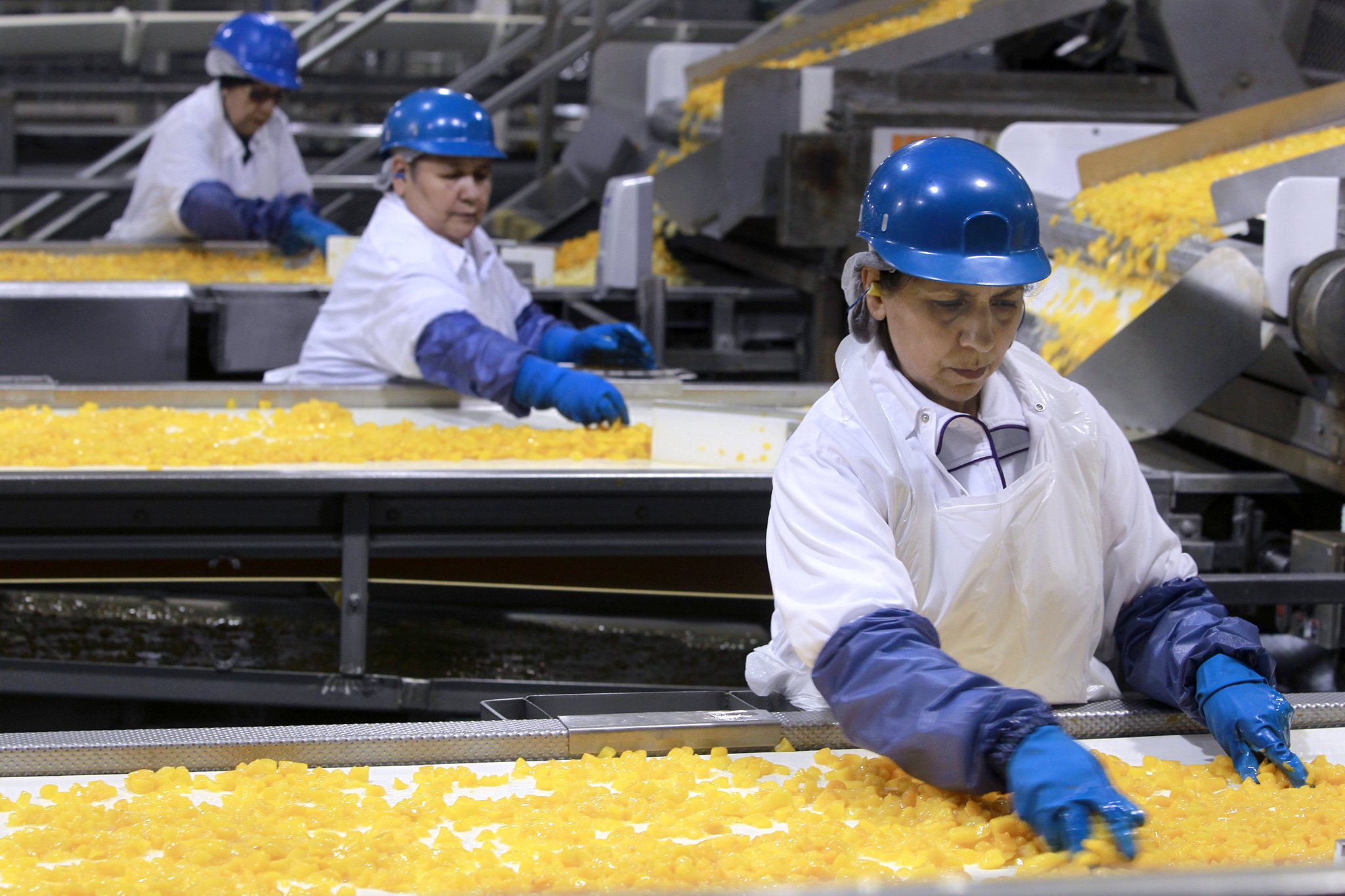
USDA approved $9M to help Central California farmers remove 420,000 clingstone peach trees after Del Monte closed its Modesto and Hughson canneries in April.
Key Takeaways
Del Monte filed Chapter 11 in July 2025 and permanently shuttered both California canneries in April 2026, stranding ~55,000 acres of fruit.
Farmers held 20-year contracts and face an estimated $550M revenue loss; ~50,000 tons of peaches have no buyer.
Pacific Coast Producers (Lodi) acquired Del Monte’s canned fruit business and offered contracts for 24,000 tons, leaving the surplus trees uneconomical.
Removing ~3,000 acres of trees before harvest is projected to save growers $30M in avoided losses versus harvesting with no market.
42 members of Congress lobbied USDA Secretary Brooke Rollins, citing multigenerational farm risk and structural damage to the agricultural base.
Hacker News Comment Review
Commenters broadly agree that clingstone peaches are a canning-specific variety with no viable fresh market, making tree removal the only rational economic response rather than a policy failure.
The logistics argument dominated: even free peaches wouldn’t move, because farmers lack trucks, packaging, and distribution infrastructure to reach distributed buyers at scale.
Del Monte’s collapse is attributed to a compounding of strategic errors: COVID-era overinvestment based on a spike in canned goods demand, failure to differentiate from store brands, and long-term decline in canned fruit consumption.
Notable Comments
@pfdietz: Del Monte misread COVID canned-goods demand spike as permanent and over-invested, then couldn’t compete with store brands on price or quality.
@oxag3n: Monoculture dependency on a single industrial buyer is the root structural risk; diversified local-sales farms avoided this outcome.