TLDR
-
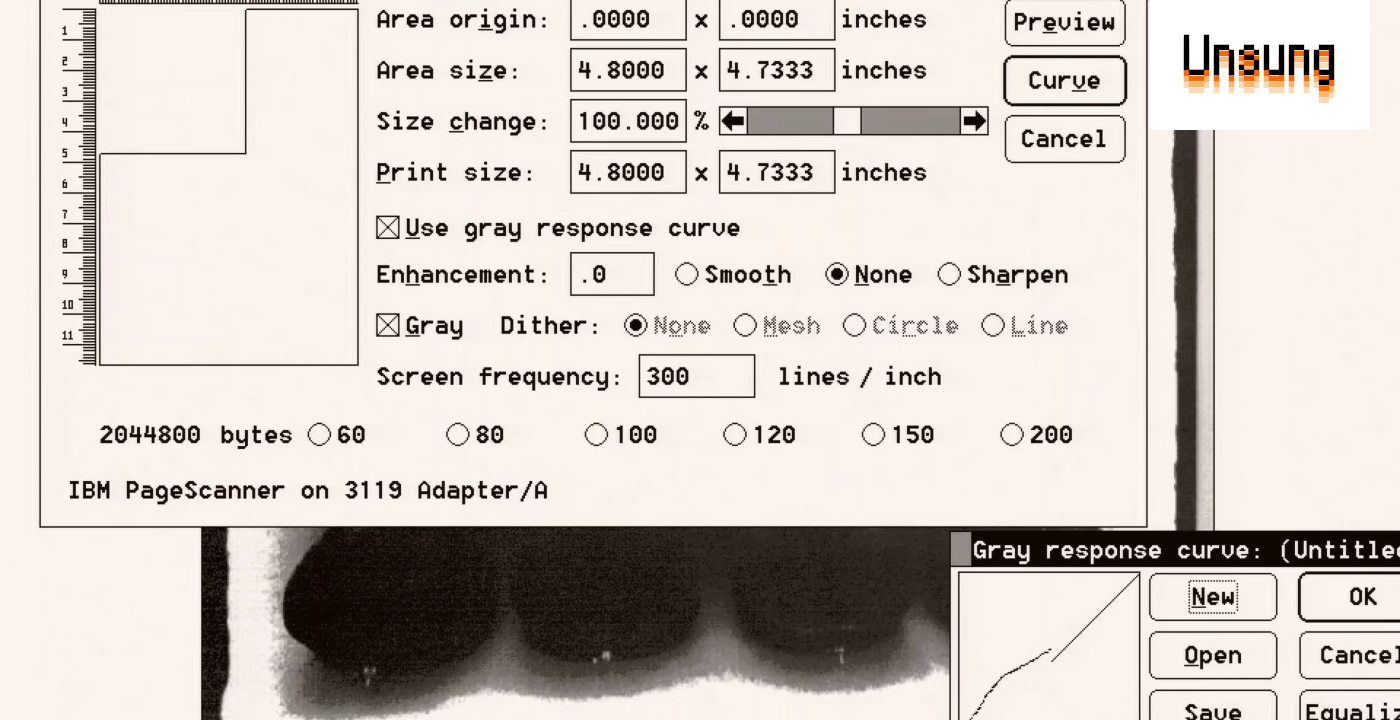
A 1980s IBM 3119 scanner used palette swapping to deliver real-time curves preview, proving instant feedback can matter more than the feature itself.
Key Takeaways
-
IBM 3119 required a rare hardware card, dual OS lockstep, and memory tuning just to operate; a 300dpi black-and-white scan in the late 1980s.
-
A 90-degree image rotation at highest quality took over 9 hours, making any slow adjustment loop effectively unusable.
-
The scanner software’s curves tool remapped a 256-shade linear grayscale palette on the GPU, costing one frame instead of minutes.
-
Palette swapping moved work to the graphics card, decoupling preview speed from image processing speed entirely.
-
The core argument: a real-time preview crosses the threshold between “use the feature” and “never attempt it,” especially without undo.
Hacker News Comment Review
-
No substantive HN discussion yet.
Original | Discuss on HN