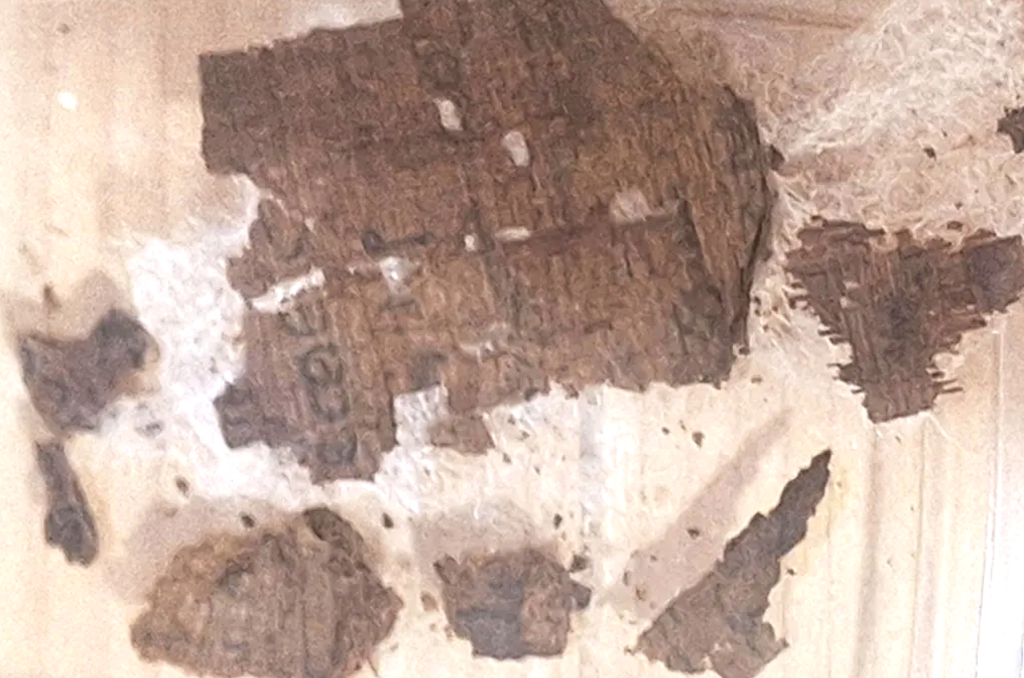
Proto-Elamite, a 5000-year-old Iranian script still largely undeciphered, may be the first writing system to encode spoken language as syllables.
Key Takeaways
Proto-Elamite is the third major early writing system alongside Egyptian hieroglyphs and Mesopotamian cuneiform, emerging around 5200 years ago in ancient Iran near Susa.
Unlike proto-cuneiform’s pictographic signs, proto-Elamite uses abstract signs written in lines right-to-left, giving it a surprisingly modern appearance.
A subset of roughly 100 proto-Elamite signs appears in sequences 4-12 signs long, consistent with syllabic encoding of speech – 500 years before cuneiform or hieroglyphs did the same.
Computer analysis of Jacob Dahl’s digitized archive of 1700 tablets revealed hidden sign co-occurrence patterns and a combinatorial grammar not previously recognized.
François Desset’s 2020 decipherment of the later Linear Elamite script (using a silver-goblet Rosetta-stone approach) supports a continuous Iranian writing tradition spanning from proto-Elamite onward.
Hacker News Comment Review
Commenters pushed back on the article’s framing that proto-Elamite was “shockingly overlooked,” noting popular books published 25 years ago already covered it in dedicated chapters.
The script’s disappearance from the archaeological record drew skepticism: perishable writing materials like early papyrus or organic surfaces could explain absence of later evidence, not necessarily collapse of the tradition.
Several commenters broadened the framing, pointing to other undeciphered or isolated scripts (Cascajal block in Veracruz, Göbekli Tepe evidence) as reminders that the origin of writing is likely far messier than any single “first” narrative.
Notable Comments
@aix1: Flags New Scientist’s “shockingly overlooked” claim as misleading hype; a popular book from 25 years ago has a full chapter on proto-Elamite.
@retrac: Cites the 1986 Cascajal stele from Veracruz as a lone, mature undeciphered script – evidence that unknown writing systems can vanish leaving almost no trace.