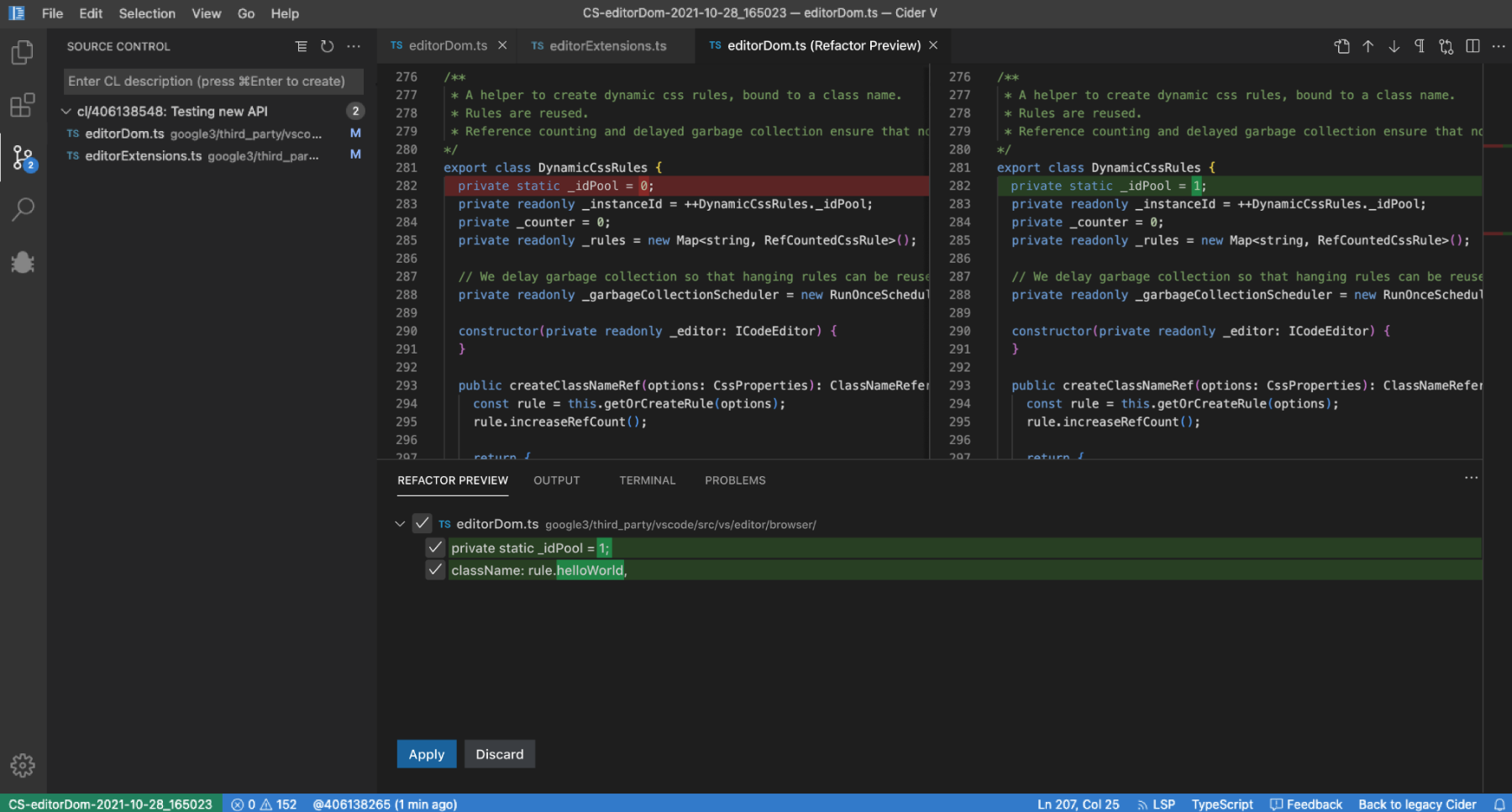
Laurent Le Brun traces Google’s IDE fragmentation from vim/emacs/Eclipse chaos to Cider V (VSCode frontend + proprietary backend) reaching 80% adoption by 2023.
Key Takeaways
Google’s monorepo scale broke traditional IDE assumptions: local indexing, local builds, and local analysis all collapsed at google3’s size.
Cider started ~2016 as a browser editor for technical writers, became dominant after adding LSP-based code completion backed by a full-codebase language graph.
In 2020 the team replaced Cider’s custom frontend with VSCode, inheriting its extension ecosystem and unblocking ~100 internal extensions within two years.
The VSCode fork required monthly upstream merges and active upstream contributions to minimize local hacks.
Consolidating on one IDE created compounding leverage: more users per change, richer AI integrations (ML comment resolution, Smart Paste, AI completion), and a viable internal extension marketplace.
Hacker News Comment Review
Xooglers confirm the Eclipse-era pain was acute for Java teams due to source control incompatibilities, and that language choice largely determined which editor you used.
A recurring thread argues the monorepo itself created the IDE problems: Google’s singular engineering talent spent years solving self-imposed tooling constraints.
Commenters note Cider V’s unusually clean EOL story for internal Google tooling, and contrast Google’s browser-first approach with Meta’s different but also impressive internal dev toolchain.
Notable Comments
@anymouse123456: “incredible and impressive feats of truly singular engineering talent continuously wasted solving problems of our own making”
@phreeza: original Cider was actually deprecated and removed, rare for an EOL’d internal Google service.