The caste system transformed Indian genetics – David Reich
Watch on YouTube ↗ Summary based on the YouTube transcript and episode description.
David Reich explains how the caste system genetically froze South Asian population mixing 2,000–3,000 years ago.
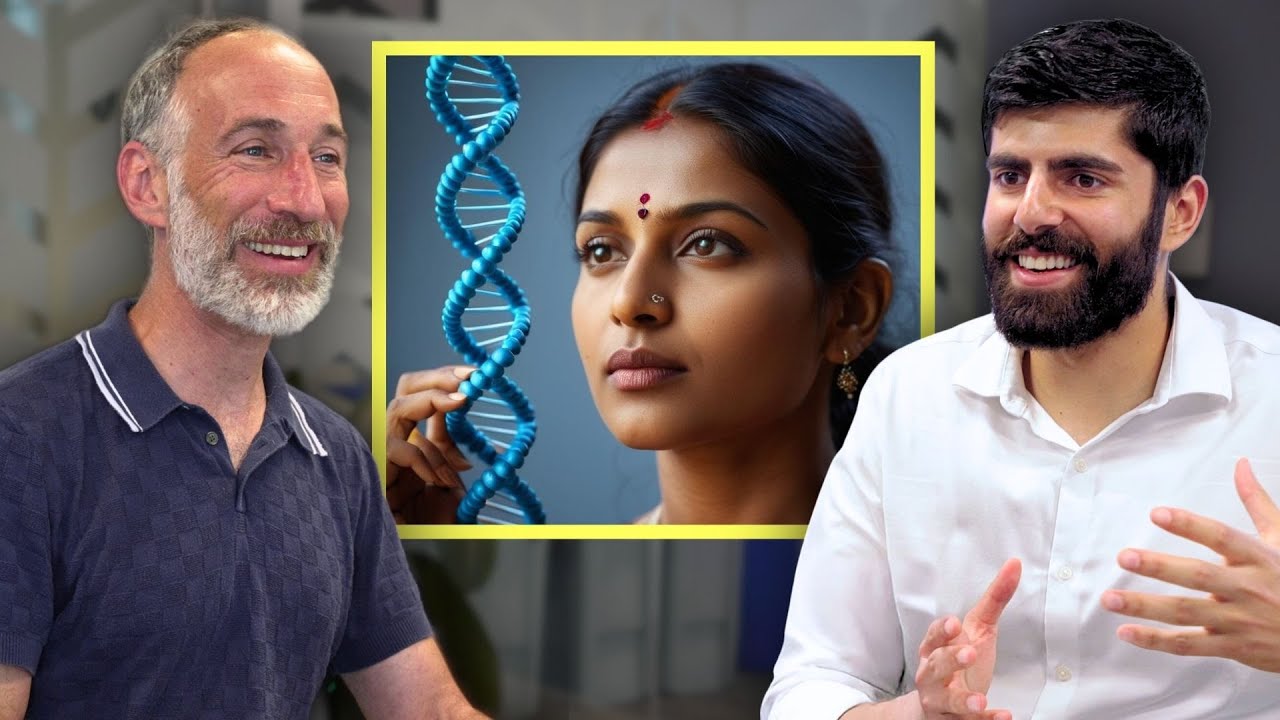
- South Asian ancestry today is a frozen two-population mixture (Ancestral North Indians + Ancestral South Indians), locked in ~2,000–3,000 years ago by the caste system.
- Before freezing, India underwent the same three-source mixing seen in Europe: local hunter-gatherers, a farming population, and steppe pastoralists.
- The Harappan civilization, which ended ~3,800 years ago, was a distinct genetic source that mixed with steppe and hunter-gatherer groups to form the two later ancestral poles.
- Without the caste freeze, genetic diversity would have collapsed to a single regional cluster as it did in Europe; instead India retained a stable gradient.
- Modern South Asian genetics resembles African-Americans mid-mixture — two distinct populations blending in varying proportions — except India’s mixing stopped.
- Patels (Gujarati) are a documented exception, sitting off the main gradient due to additional Central Asian ancestry.
- First quality South Asian genomic data came embarrassingly from a Gujarati sample recruited in Houston, Texas via the HapMap project.
2024-09-22 · Watch on YouTube