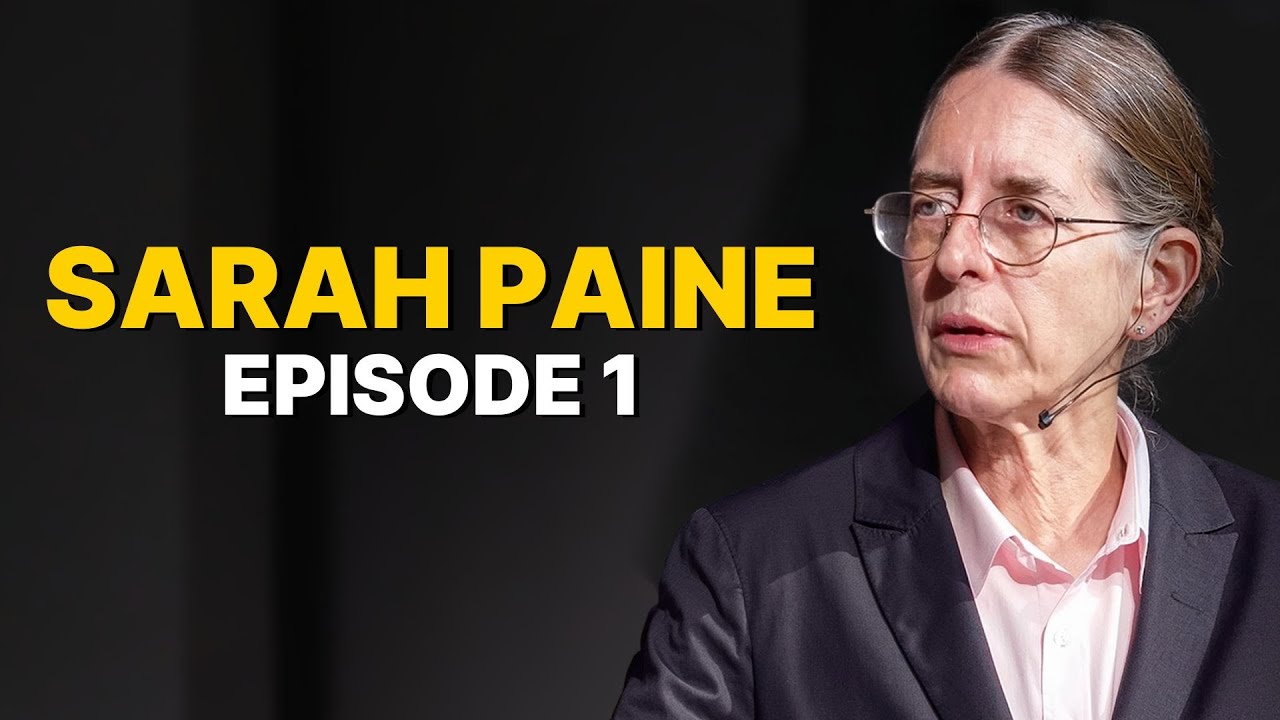
Sarah Paine — The war for India (lecture & interview)
Watch on YouTube ↗ Summary based on the YouTube transcript and episode description. Prompt input used 79979 of 128391 transcript characters.
Sarah Paine (Naval War College) argues that five pivotal Cold War decisions locked in the China-Pakistan vs. India-Russia alignment that still governs South Asia today.
- In 1969 the Soviets asked the US whether it was acceptable to nuke China; when the US said no, Mao concluded the USSR—not the US—was his primary adversary, reshuffling all Cold War alliances.
- The US-Pakistan Baghdad Pact alliance (Eisenhower’s own retrospective judgment: ‘perhaps the worst decision we could ever have made’) poisoned US-India relations for the entire Cold War.
- China built all-weather roads through Tibet 1950–1957; India didn’t discover them until 1958, which is why the 1962 Sino-Indian War defeat was total—China could deploy troops, India could not.
- After the 1962 war India doubled its army to 750,000 and created 10 mountain divisions; Paine argues that if China had not invaded, a China-India coalition would have fundamentally altered the world order.
- Pakistan ceded territory to China in 1963—likely in exchange for nuclear development assistance, though undocumented—cementing the Pakistan-China axis against India.
- Putin is expending Cold War ordnance stockpiles in Ukraine while leaving Siberia exposed; Paine says the Xi-Putin relationship will end, and China will choose the moment least convenient for Russia, possibly leveraging Siberian resources including Lake Baikal (20% of world’s fresh surface water).
- The Able Archer 1983 war-game nearly convinced Soviet leadership the US had launched a real strike; Reagan moderated his rhetoric after learning how close to the edge Soviet commanders were.
2025-01-16 · Watch on YouTube