
Our biggest difference with Neanderthals – David Reich
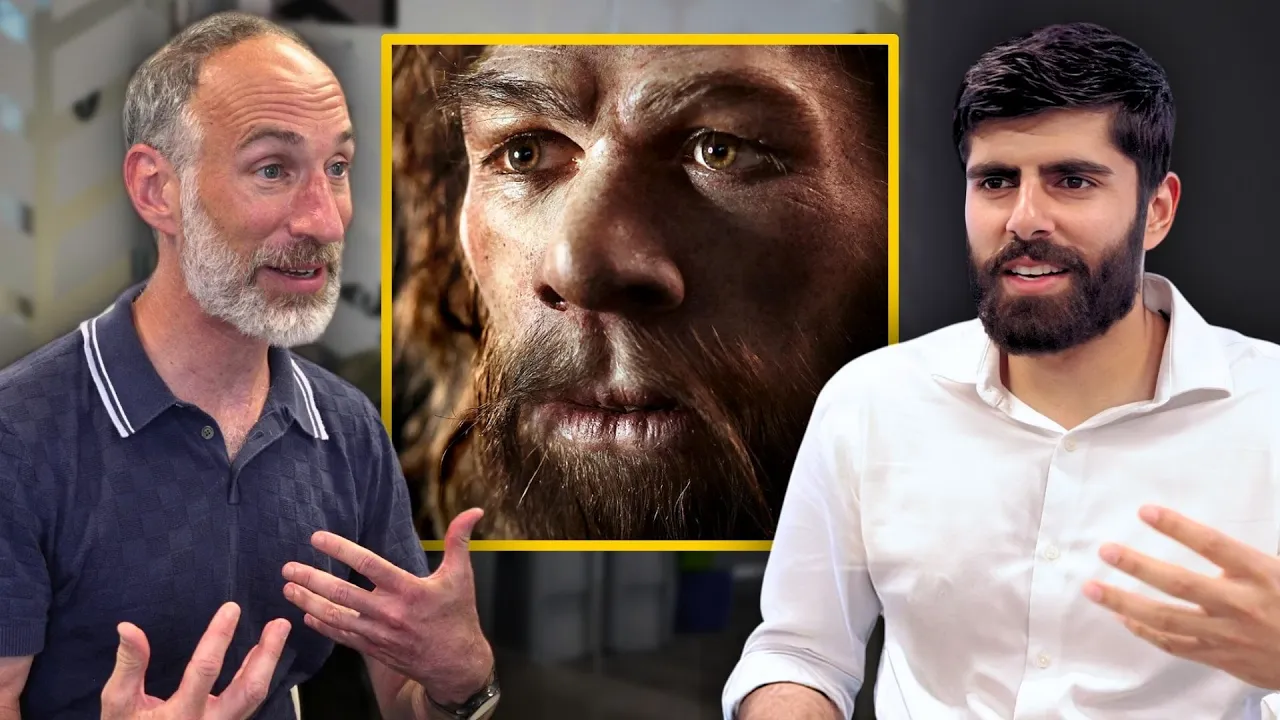
Watch on YouTube ↗ Summary based on the YouTube transcript and episode description.
David Reich explains how epigenetic methylation maps reveal that modern humans—not Neanderthals or Denisovans—evolved a distinctively shaped vocal tract, possibly explaining language superiority.
- Epigenetic methylation patterns survive in ancient Neanderthal and Denisovan genomes, allowing researchers to map which genes were turned on or off.
- ~1,000 differentially methylated regions were found specifically on the modern human lineage—absent in both Neanderthals and Denisovans.
- The strongest statistical signal in modern-human-specific methylation changes pointed to the laryngeal and pharyngeal vocal tract.
- These changes remodel soft tissue (not preserved in skeletons) toward a shape known to enable the full range of human speech sounds that chimps cannot produce.
- Neanderthals likely had complex communication and possibly some form of language, but the vocal tract shift appears exclusive to Homo sapiens.
- The finding was so unusual that several co-authors dropped off the paper to avoid association with it; Reich says it has since held up.
- The vocal tract evolution may coincide with the Upper Paleolithic Revolution 50–100k years ago, when behavioral modernity appears in the archaeological record.
2024-09-03 · Watch on YouTube