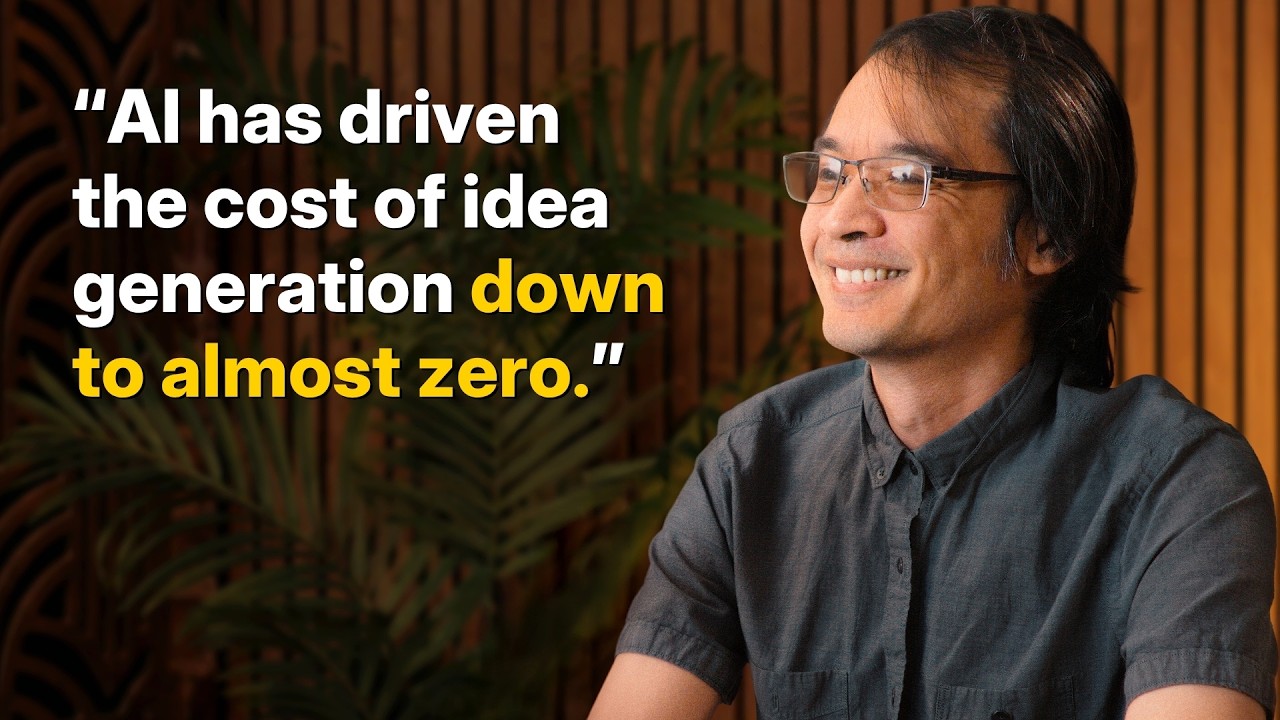
Evolution designed us to die fast; we can change that — Jacob Kimmel
Jacob Kimmel of NewLimit argues epigenetic reprogramming can reverse cellular aging because evolution never optimized for longevity — making it a tractable engineering problem.
- Evolution did not optimize for longevity because high baseline hazard rates (predators, infection) meant few individuals lived long enough to exert selection pressure on late-life health.
- Aging may face negative selection via kin selection: aged individuals consuming calories while contributing less fitness are a net drag on genome propagation.
- Shinya Yamanaka showed just 4 transcription factors can reset adult cells to embryonic state, proving simultaneous age and type reprogramming is possible.
- TRIM5α in humans once blocked an HIV-like pathogen but mutated to fight a now-extinct retrovirus — a few edits could restore HIV resistance in human cells today.
- NewLimit builds proprietary perturbation datasets in human cells (not cancer lines) to train models predicting which transcription factor combinations reverse cellular aging.
- Drugs represent only ~7% of total US healthcare spend; age-prevention medicines could reduce expensive end-of-life inpatient costs, which consume ~1/3 of all Medicare spending in the final year of life alone.
- ~70% of approved drug molecules originate from small biotechs despite R&D spend being dominated by large pharma, which increasingly acts as an acquirer/partner rather than early discoverer.
2025-08-21 · Watch on YouTube