Marc Andreessen on how the internet changed news, politics, and outrage | The a16z Show
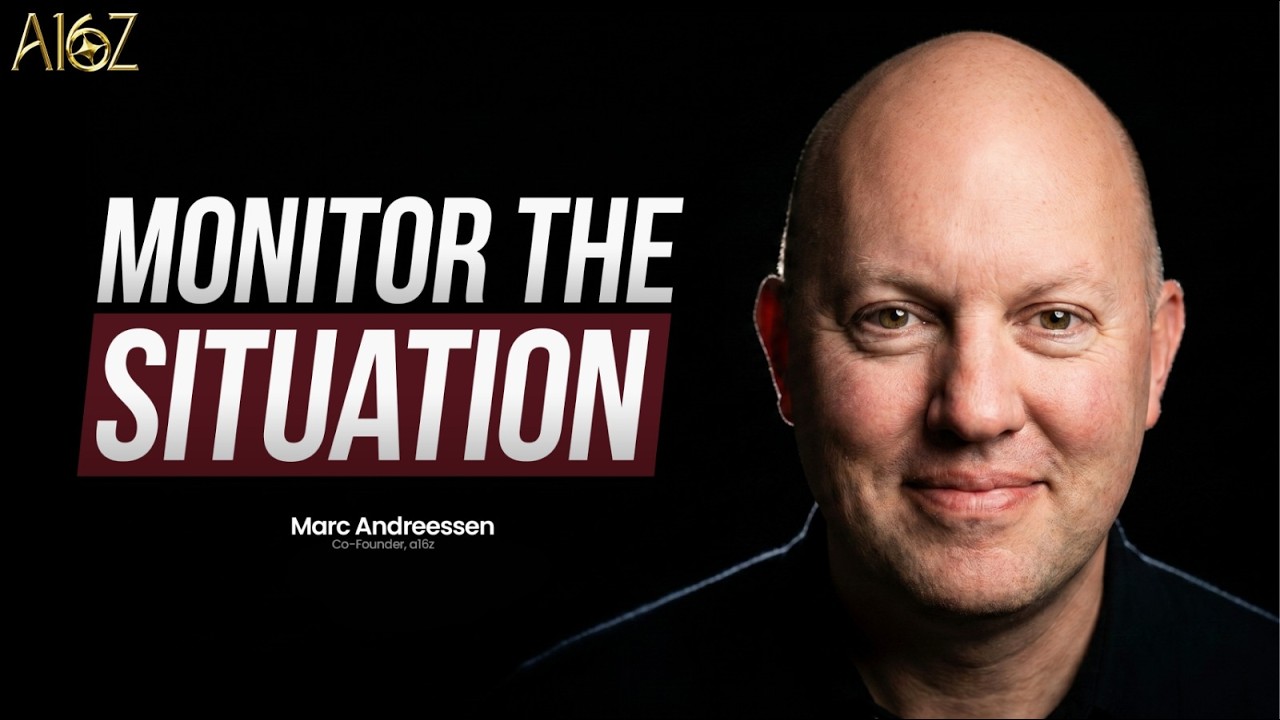
Marc Andreessen argues social media’s 2.5-day outrage cycles are replacing physical political violence, and predicts the first true internet-native president will emerge by 2032.
- Each viral social media meme follows a ~2.5-day panic half-life; whatever drives today’s political narrative is irrelevant 100 cycles before an election.
- Andreessen argues measured political violence in Western societies is at an all-time low, and online outrage is a safety valve displacing street violence.
- CNN’s original 1981 business plan, called ‘Randemonium’ by founder Reese Schonfeld, was to lock onto ‘the current thing’ and stream it continuously — the internet reinvented this at global scale.
- Kuran and Sunstein’s ‘availability cascade’ framework explains viral outrage: an ‘availability entrepreneur’ deliberately seeds a narrative; Rosa Parks’s bus protest was a trained, orchestrated availability cascade.
- Andreessen claims AI doomerism is substantially funded by dark money — paying influencers to take positions is legal and requires no disclosure, unlike product ads or political donations.
- Trust in centralized institutions began collapsing around 1970, not with social media; cable news and print are in full-scale collapse while three-hour podcasts and Substack grow simultaneously.
- Trump is a TV-social media hybrid who reportedly tweets to change CNN chyrons in real time; Andreessen predicts a fully internet-native presidential candidate, likely by 2032, who ignores TV entirely.
2026-04-22 · Watch on YouTube